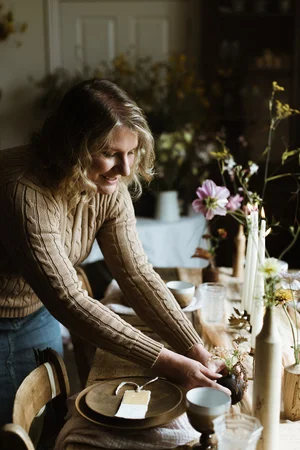
Join our year of blue and add your sky reading with a cyanometer each sunday
For us here at An Acre of Land, blue is a colour representing nature, art and happiness; themes we weave into every stitch of our designs, and something we want to share with you as we move through 2026 and welcome in our new clothing collections.
There are days when the sky is so blue it feels painted on. Others when it pales to grey, deepens to steel, or changes at a moment’s notice. Most days we look up with a glance and move on with our day; or if you are British you may have become very obsessed with the exact colour and what it means for the imminent weather approaching…
In 2026 we aim to hold that glance up to the sky for a little longer.
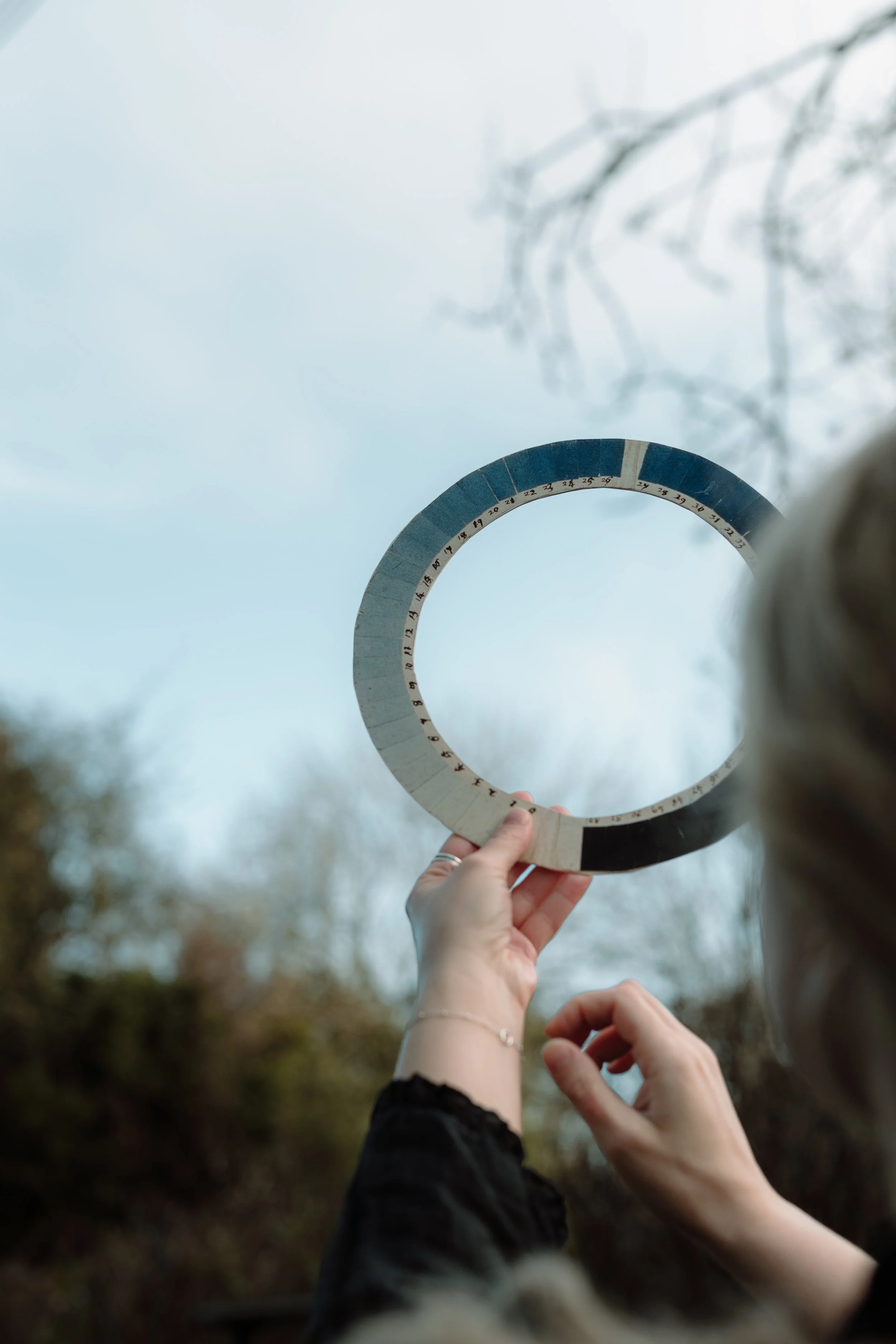
An historical weather-reading device called a cyanometer gives the blue of the sky a number and a name, and a Sunday reading gives us a simple way to gather, wherever we are. Same week, same sky, different blues.
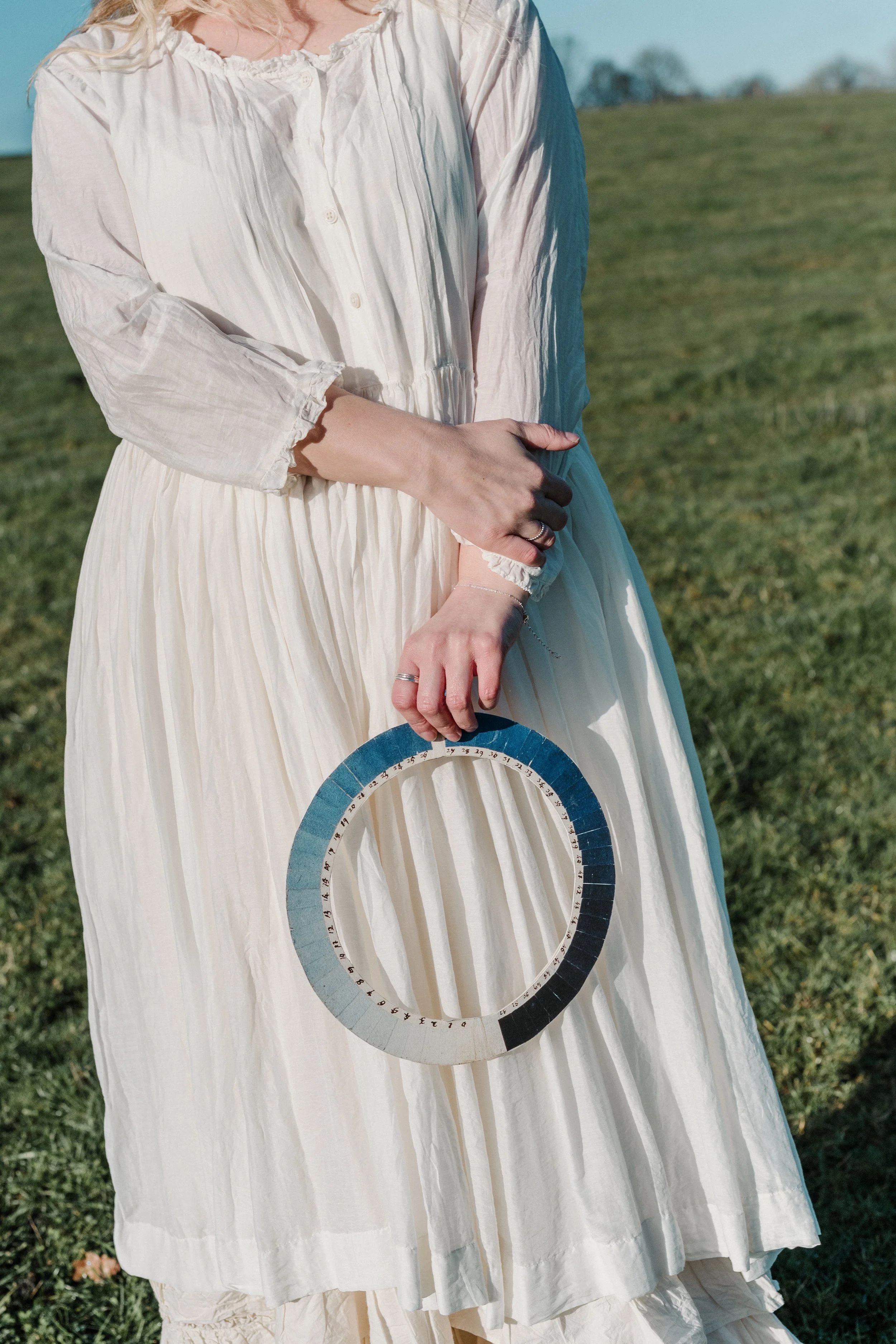
What is a cyanometer?
A cyanometer is an instrument for measuring the blueness of the sky. At its simplest, it is a set of numbered blue swatches, arranged in a circle with the centre cut out, that you hold up to the sky and match by eye. The number equates to a specific shade of blue and can be shared or kept in a private journal of naturalist observations.
A brief history of sky measuring
The cyanometer is most often attributed to the Swiss naturalist, mountain climber and physicist, Horace Bénédict de Saussure in 1789. In descriptions of his instrument, it is recorded as having 53 numbered steps, running from white through blues to near black. All shades of Prussian blue of the era. The idea was that the blue colour of the sky, as well as the transparency of the atmosphere, deepens with ascent. They were reading ‘atmospheric blues’, allowing users to compare, identify, and measure atmospheric transparency, humidity, and dust levels.
Later, Alexander von Humboldt carried a cyanometer on his travels in South America and made readings during voyages and mountain ascents, including a noted reading taken on Chimborazo in 1802.
“To give me the means of comparing with some certainty the blue colour of the sky, as it is seen on the summit of the Alps and the Cordilleras, Mr Pictet had this cyanometer coloured conformably to the division of that which Mr de Saussure made use of at the top of Mount Blanc, and during his memorable abode at the Col du Geant.”
Humboldt broke both the record of highest altitude ever reached by humans, but also of observed darkness of the sky, with 46 degrees on the cyanometer.
There are some further beautiful observations that transcend the scientific by Humboldt in his writings, Personal narrative of travels to the equinoctial regions of the new continent during the years 1799-1804 by Alexander de Humboldt and Aimé Bonpland, London, Printed for Longman, Hurst, Rees, Orme, and Brown, 1822 https://doi.org/10.5962/bhl.title.87587
“The chamois hunters and Swiss herdsmen have at all times been struck with the intense color of the heavenly vault on the summit of the Alps.”

© Collection Musée d’histoire des sciences, Geneva
Matériel de recherche, Horace-Bénédict de Saussure deuxième schéma du cyanomètre, 1788
Cyanometers and Art
Over the centuries cyanometers have occupied a pleasing intersection between science and art. Artists have borrowed the cyanometer’s circular scale as both image and idea, a way to turn looking into a ritual. Even Byron referenced it in his epic Don Juan. Olafur Eliasson has made cyanometer-inspired colour experiments as paintings, using the format to explore how we perceive gradients and light.
There are also public works that bring the instrument into street art, like Martin Bricelj Baraga’s Cyanometer installation, which points your gaze back to the sky and gathers readings over time.
How does it work?
A cyanometer does not read the sky in a scientific sensor sense. It standardises your looking.
You compare the sky to a fixed set of blues and choose the closest match. The 53 numbered steps run from 0 as white to 52 as black. Record the number, plus a few details that help make the reading meaningful over time, for example:
Date and time
Location
Weather notes (clear, haze, high cloud)
Where you looked (straight up at the zenith is best)
Why does the sky change so much? In broad terms, tiny air molecules scatter shorter wavelengths of light more strongly (often described as Rayleigh scattering), which is why the sky appears blue in clear conditions. Haze, moisture, and particles can brighten and soften the blue, especially near the horizon.
The cyanometer is a way of tracking those shifts with your own eyes, week by week.
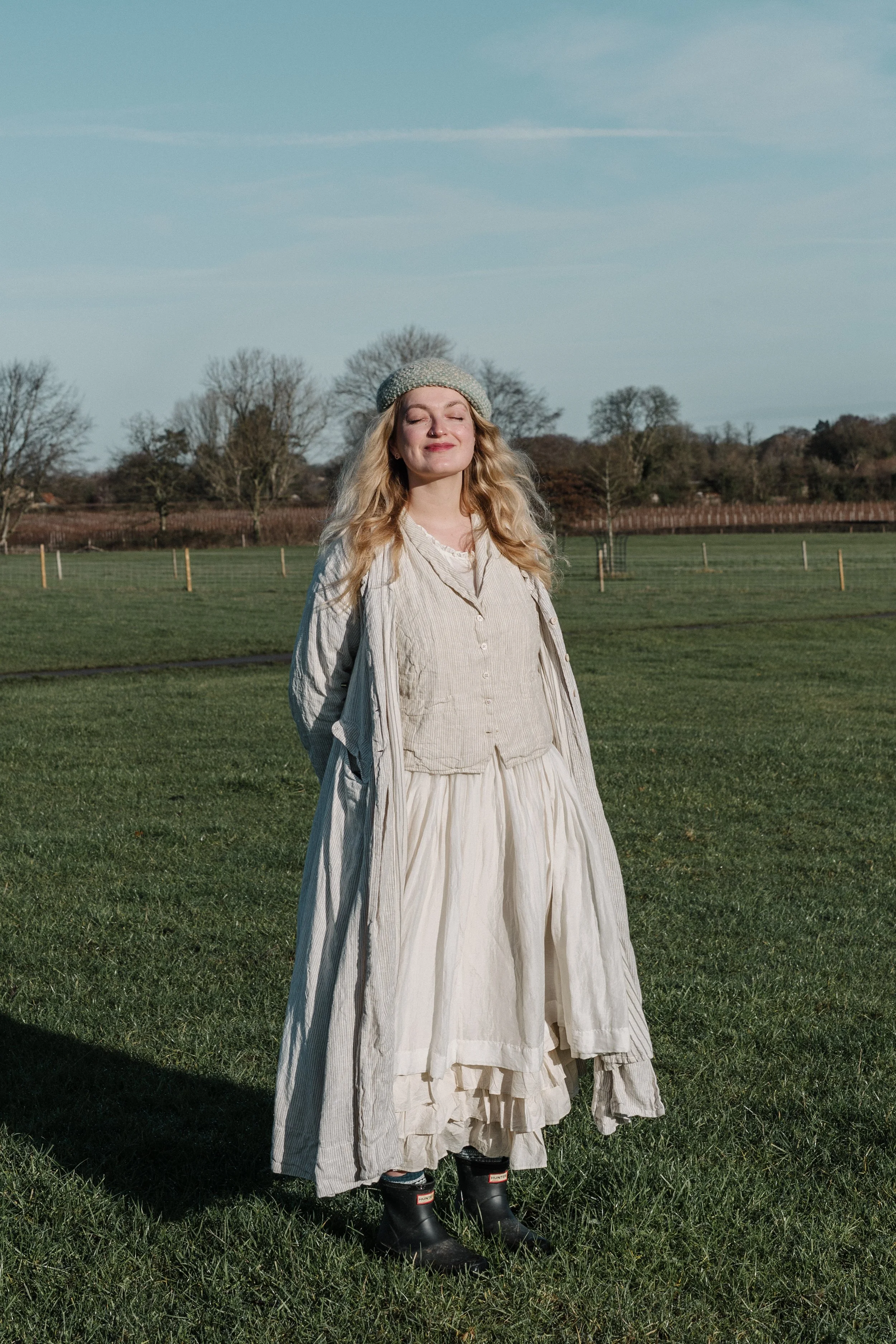
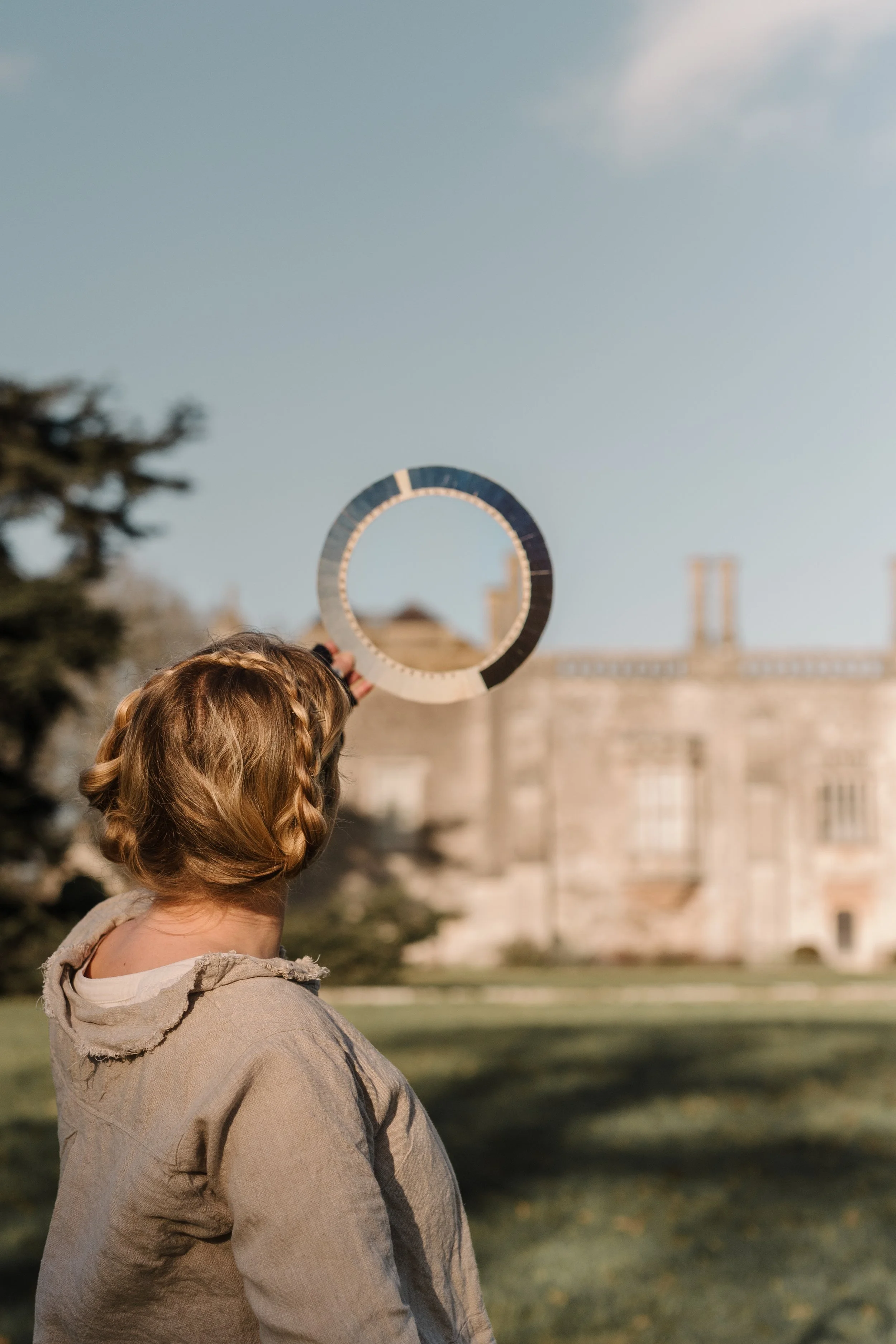
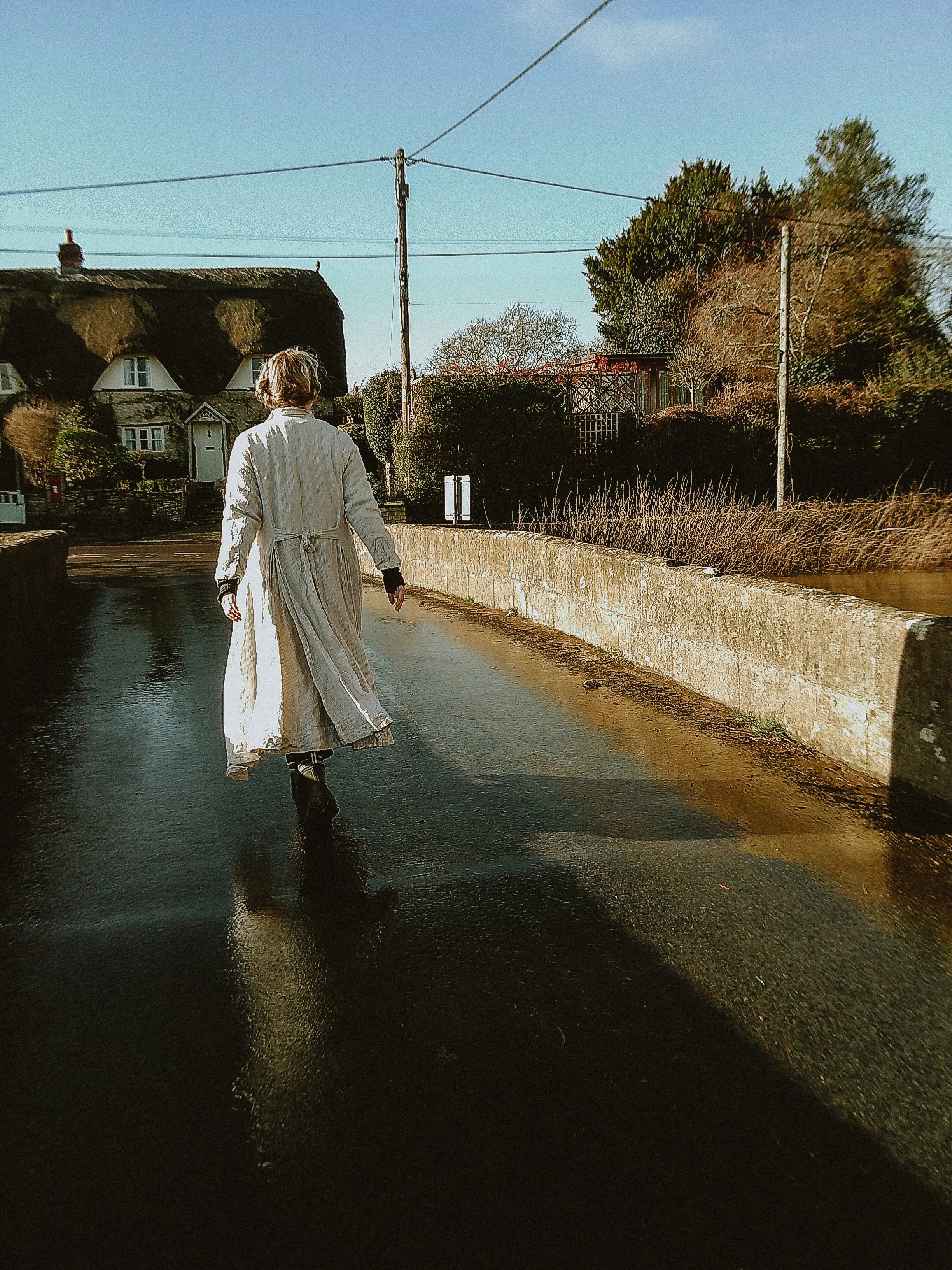
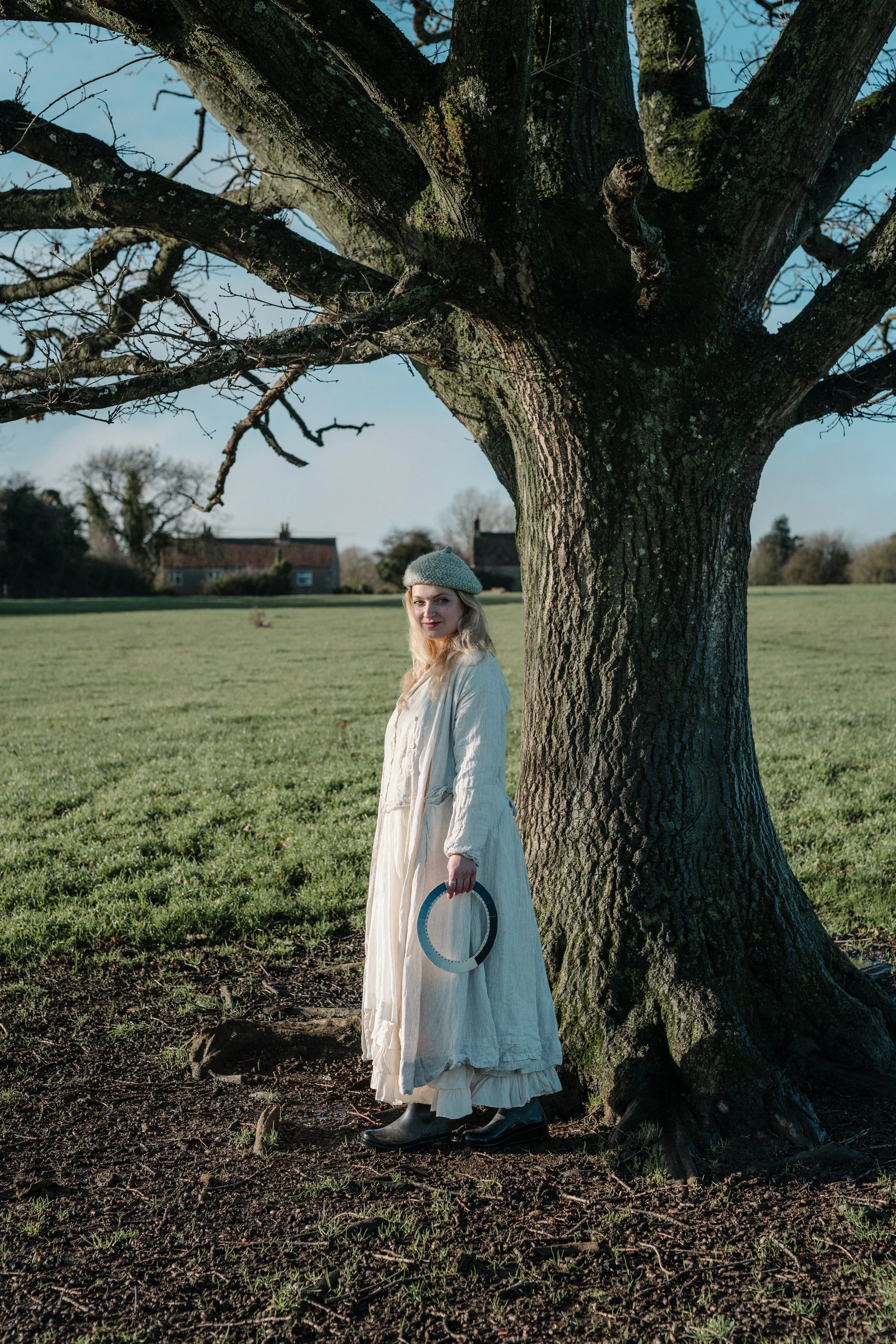
How we are using cyanometers at An Acre of Land
Blueprints is our year of blue, in cloth, in dye, and in the everyday sky above you.
In 2026, we’re turning the cyanometer into a shared practice. A small Sunday ritual, wherever you live. A way to gather a community around noticing, rather than noise.
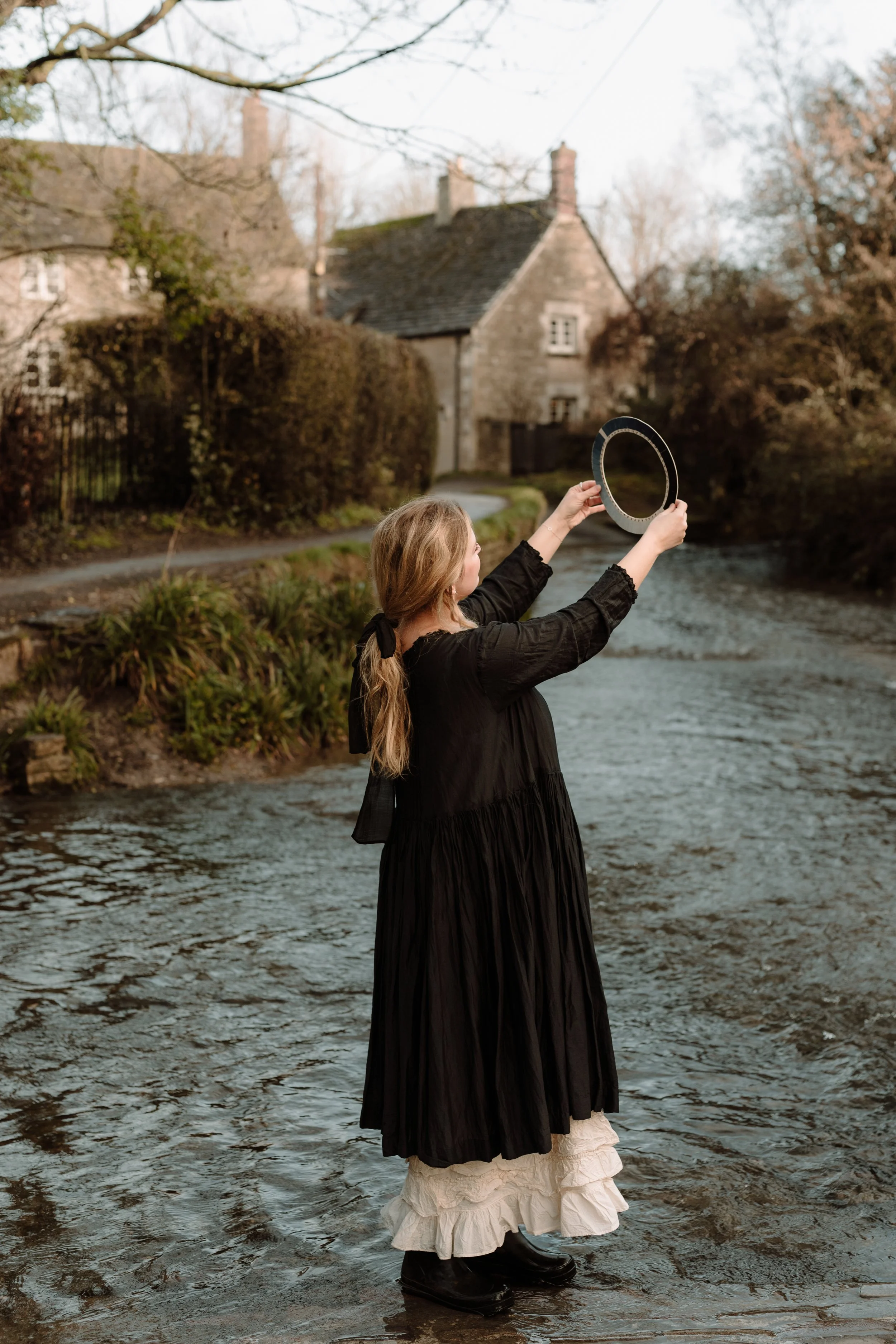
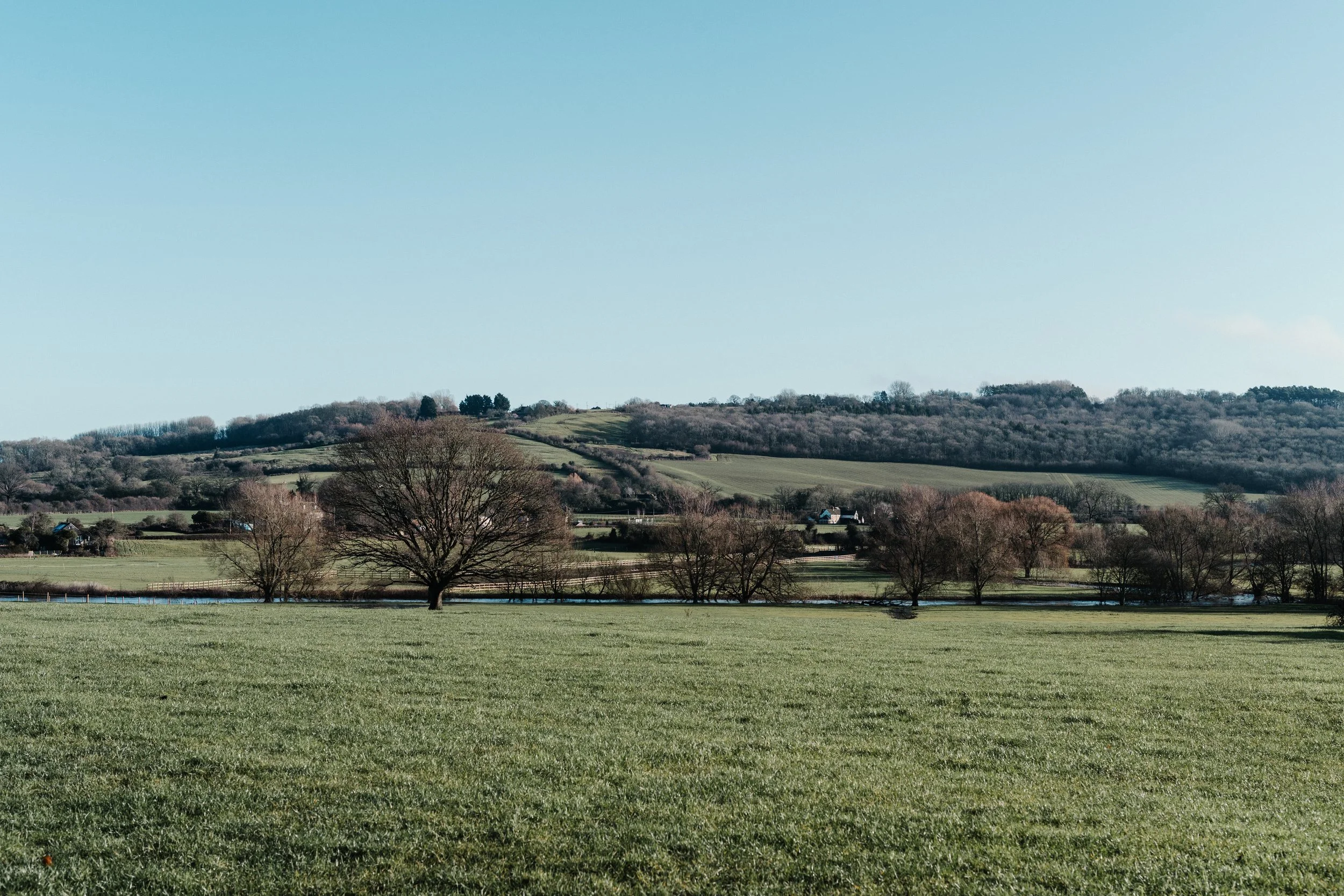
Every Sunday, we’ll share our cyanometer reading on Instagram and invite you to share yours too. Some of us will be under wide country skies, some in town, some by the coast, some in a field, some at a kitchen window. Same sky, different blues.
How to take a reading
Step outside if you can.
Turn away from the sun (it helps avoid glare and false brightness).
Hold the cyanometer up and look at the sky overhead, not the horizon.
Choose the closest match and note the number.
Take a photo if you’d like, then share it with your reading.
Compare it to your art if you feel moved to do so, does this shade show up for you anywhere else in your life? In your clothing, your paintings, your home?
You’ll receive a printed cyanometer with every order from us. You can still take part without ordering by using the free app This Blue, a digital cyanometer inspired by the historical instrument.
The blue of the sky is different for each of us, and sharing it is a simple way to feel connected and understood, something that often feels lacking across the world right now.
Join us each Sunday
Follow us on Instagram @an_acre_of_land and share your Sunday reading and tag us - we can’t wait to share your stories in blue.
If you’d like to learn more about how we are working with other artists and the colour blue and the Blueprints SS26 Collection story as it unfolds, sign up to our newsletter.