
Book review: Move Slow & Make Things by Marian Parsons. Lessons on the creative life.


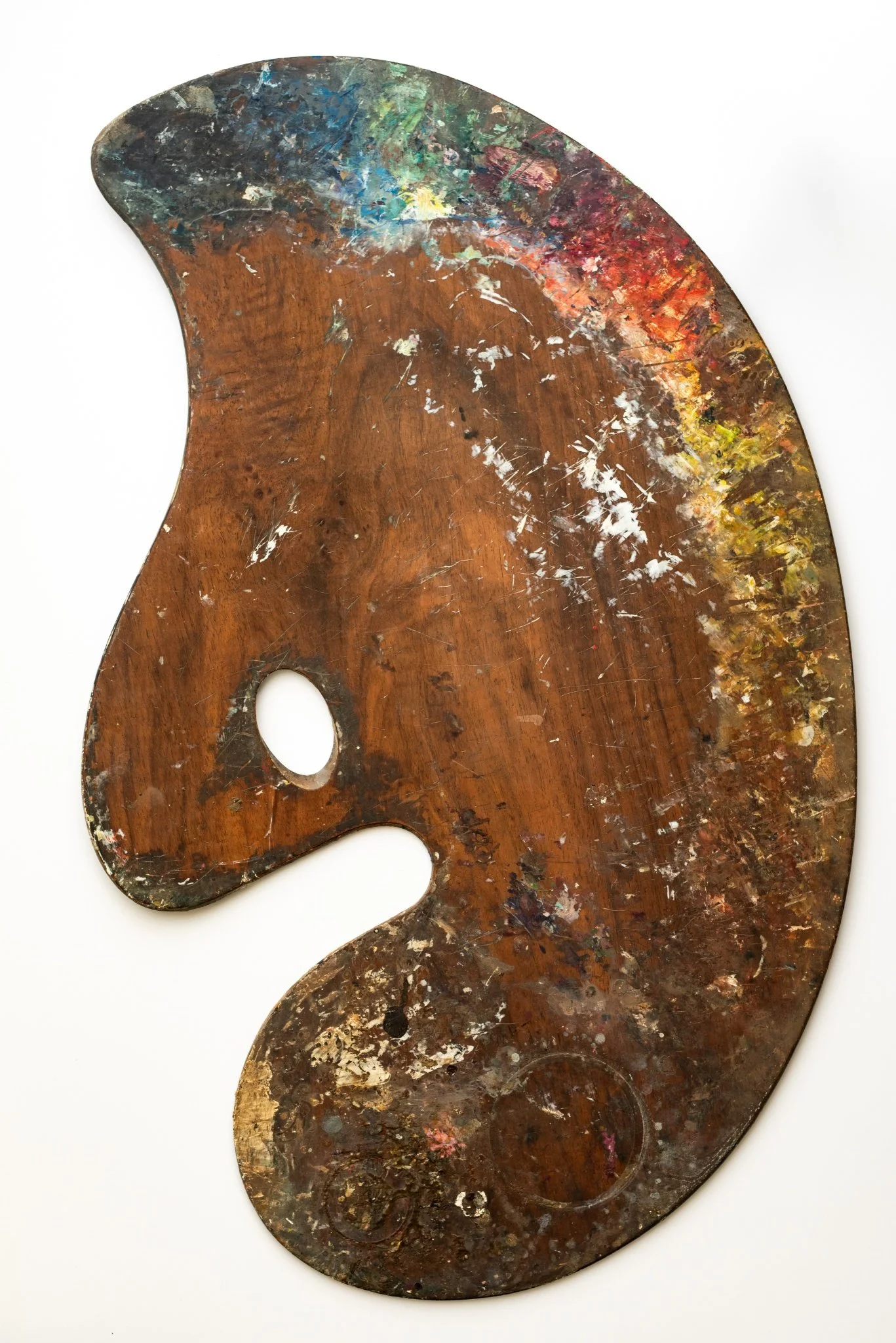
Before anything else, she tones the canvas blue.
Ultramarine and burnt sienna, Ultramarine and burnt sienna, washed thin across a small cut of gessoed cotton. A preparatory act. This moment, Marian Parsons tells us, is exactly where the creative life starts. Just a single, tentative mark in the right direction.
That is the ethos at the heart of Move Slow & Make Things. Known online as Miss Mustard Seed, Marian is a painter, writer, home maker, furniture restorer and lover of the made thing.
She's been sharing her work online since 2009, and through her long creative practice, she has an abundance of gentle wisdom to share.
Move Slow & Make Things is a collection of essays and honest observations about what the creative life actually asks of you and what it gives back.
Move Slow & Make Things was published on 1 September 2026, but we were very grateful that Marian shared a copy with us ahead of time. Here are the lessons on creative practice that stayed with us most.
Give yourself a hundred chances to find out


Our tendency to draw conclusions about ourselves long before we've given anything a fair chance is a theme Marian returns to throughout the book.
It was an Instagram challenge that shifted her thinking. A watercolour artist had committed to painting 100 meadows in order to truly learn her medium. Marian decided to do the same with oils, the paint she'd always been most intimidated by.
Her first thirty or forty paintings were a struggle, but somewhere past the midway point, she realised how much she had learned. Not just about oil paint, but about what she was actually capable of when she stopped deciding in advance.
Her invitation is a simple one: give something a hundred honest, committed attempts before you decide whether it's for you. You cannot possibly know what you are capable of from a limited vantage point.
Trust in the fallow season

In an episode of Gardeners' World, Marian notes how Monty Don clips back a newly planted hydrangea, cutting the blooms so the plant's energy can go into the roots instead. The blooms are visible, shareable, the thing everyone notices. But without the roots, they cannot last.
Marian sees this as a metaphor for the creative life. The invisible, unglamorous work of resting and replenishing makes creative work possible at all.
She also writes about micro-seasons, a concept drawn from the Japanese calendar which names seventy-two distinct turns in the year. Applied to a creative life, it shows us that the fallow weeks are not a sign of failure. The periods when nothing comes, when the work feels thin, or the ideas won't arrive, are their own kind of season with their own purpose.
Something is always happening underground, even when there is nothing to show for it. Rest is not the opposite of making. It is the condition from which making grows.
There is only one pair of hands like yours

Many makers, Marian observes, spend years wishing their work looked more like someone else's, not realising that the very things that make it distinctly theirs are the most valuable things about it.
All the things you are trying to escape are the best things about your work. Your alchemy lies in the particular way you see. The recurring palette you keep using. The shape of a familiar hem on the sketchbook. These are not flaws to refine away, but rather, they bear witness to their creator. The work becomes the artist's signature. are the signature.
What your hands make carries the weight of everything you have ever loved, every material you have ever touched. No other pair of hands in the world, however skilled, could make exactly that thing in exactly that way.
There will always be room for more beauty


During a season when creativity feels thin, Marian goes for a walk and comes home to write a list in her notebook.
“Soil is not scarce. Water is not scarce. Sunshine is not scarce. What my neighbours do in their yard does not impact what I can or cannot do in mine”, she writes.
The internet, with its follower counts and algorithmic rewards, makes scarcity feel real. The sense that the space is already full, that what someone else is making is somehow using up what you might have made.
But there is no fixed amount of people who want to be moved by something handmade. Who wants cloth that carries a story or own a piece of art that moves them to tears.
People who want beautiful things are not scarce. Because, after all, here you are.
For everyone who makes things with their hands and their heart
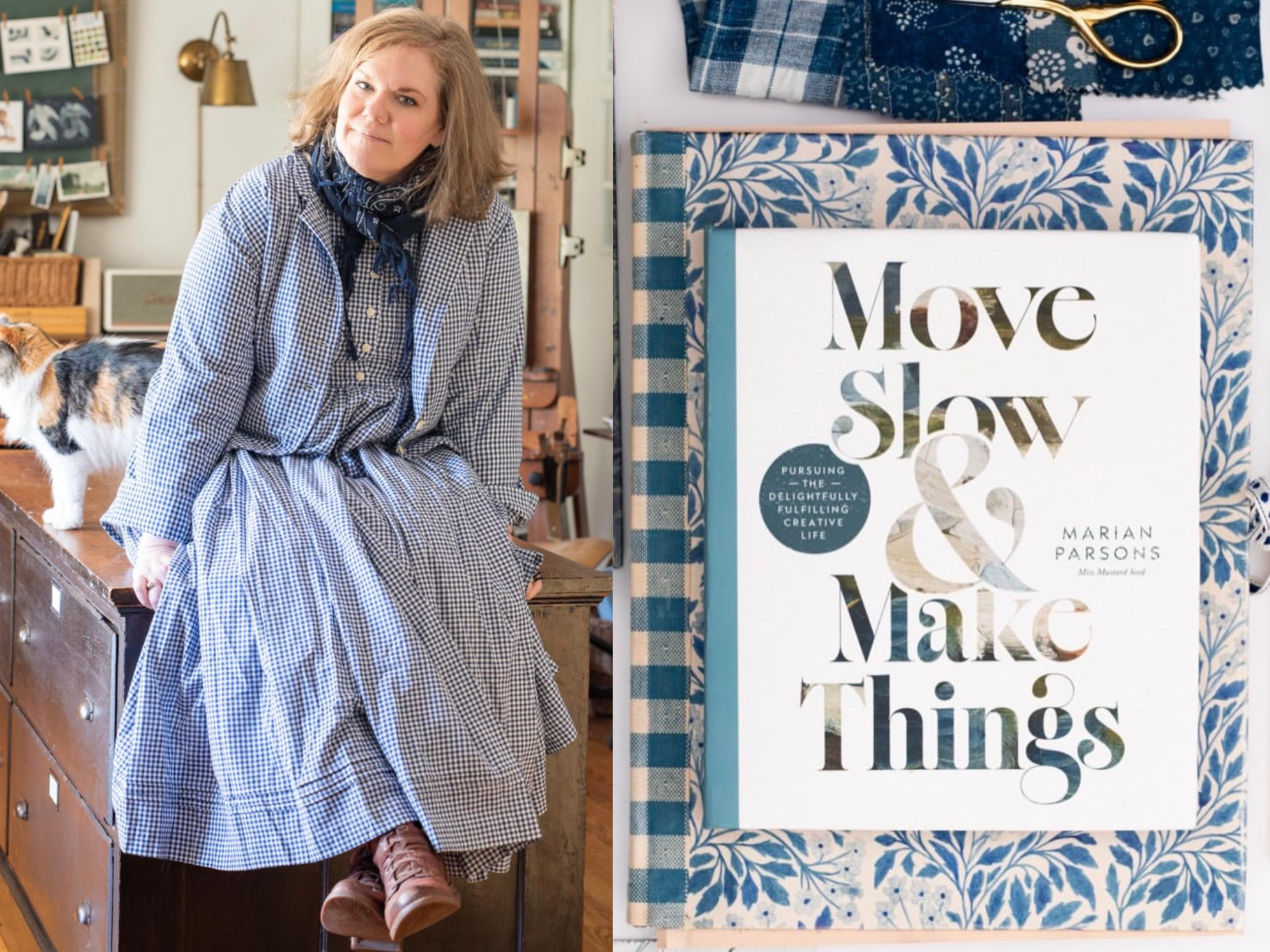
Move Slow & Make Things is a book about what sustains a creative life and what it gives back when you tend it with care.
Read it slowly. It will not tell you what to make or how to make it. But it will, if you let it, remind you that you already know.
Our thanks to Marian for so generously sharing an early copy with us. We have loved every page. Move Slow & Make Things was published 1 September 2026 by Ten Peaks Press / Harvest House Publishers.