
Uncovering Indigo: the history of blue gold

Photo by Kseniya Lapteva
Blue is everywhere — in the sky above, in the sea beyond. And yet, for most of human history, it has been an elusive colour.
Nature gives us red from madder, yellow from weld, brown from bark, hull, and husk. But blue comes from one plant only: indigo.
This is the story of indigo, otherwise known as blue gold. It is a tale of fermentation and alchemy, of trade routes and empire, of workers' clothes and slow cloth, and of a blue that has utterly captivated our wildest imaginings.
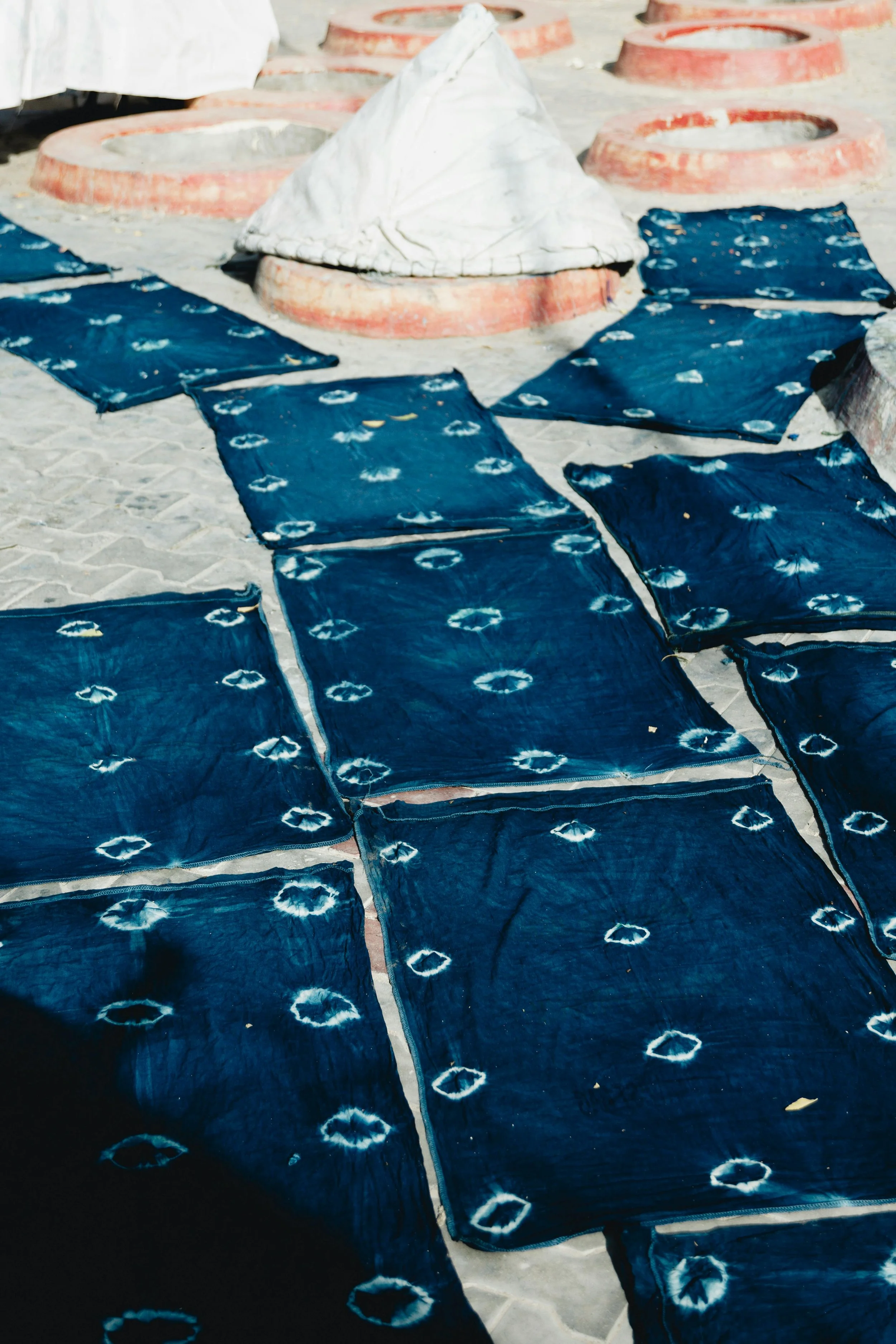
Photo by Usman Abdulrasheed Gambo
The oldest known indigo-dyed cloth was discovered in Peru, wrapped in the silence of a temple mound at Huaca Prieta. It dates back to at least 6,200 years.
Indigo has many names and many birthplaces. In India, where the word itself derives from the Greek indikon, meaning “from India”, farmers cultivated Indigofera tinctoria, a low, unassuming shrub whose leaves hold the dye.
In Japan, it was tade-ai, a plant of the knotweed family. In Britain and France, where the climate could not support tropical indigo, dyers grew woad — Isatis tinctoria — and produced the same miraculous blue.
The chemistry of indigo is unlike any other natural dye. The colour does not exist in the living plant. It must be conjured.
The alchemy of the vat
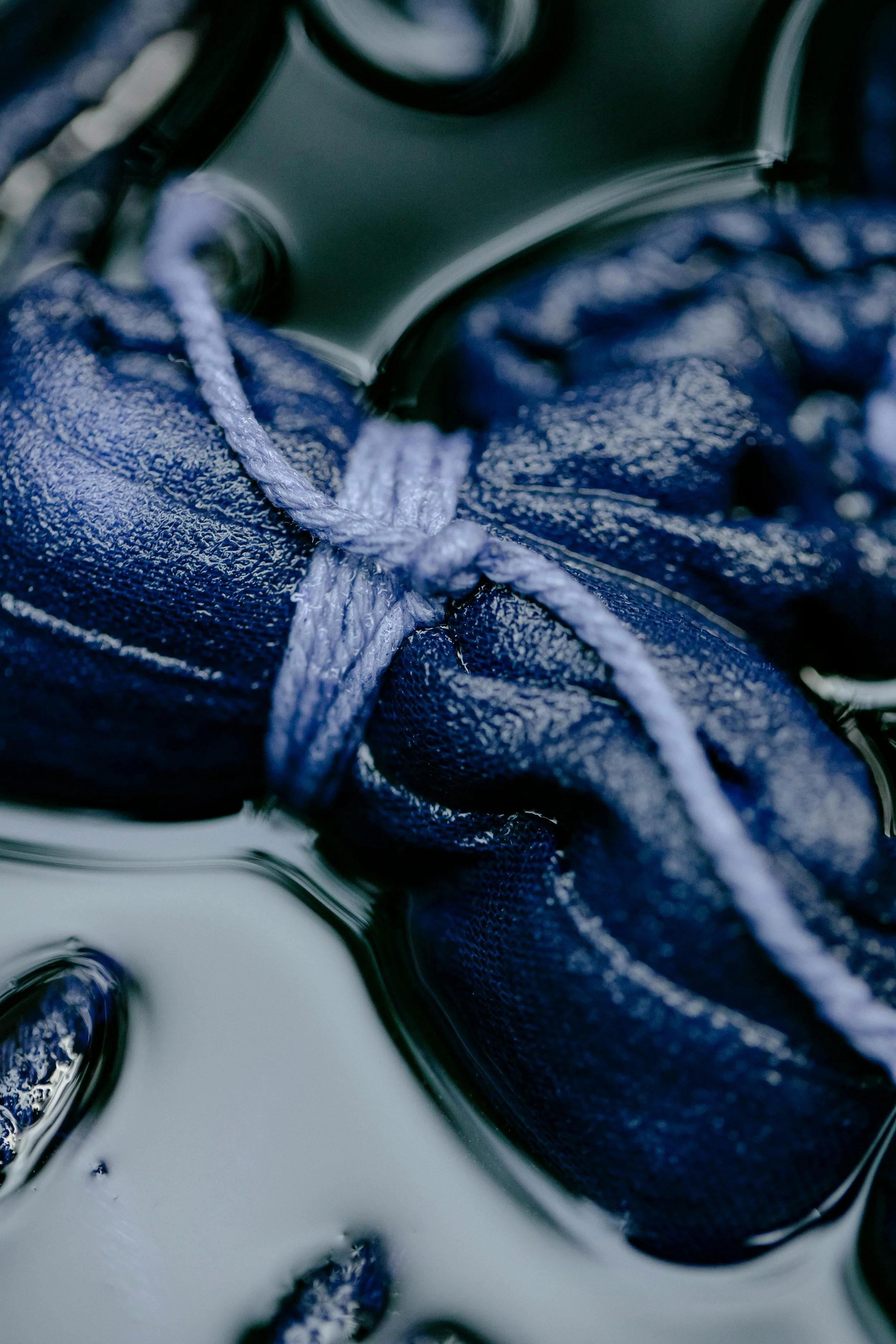
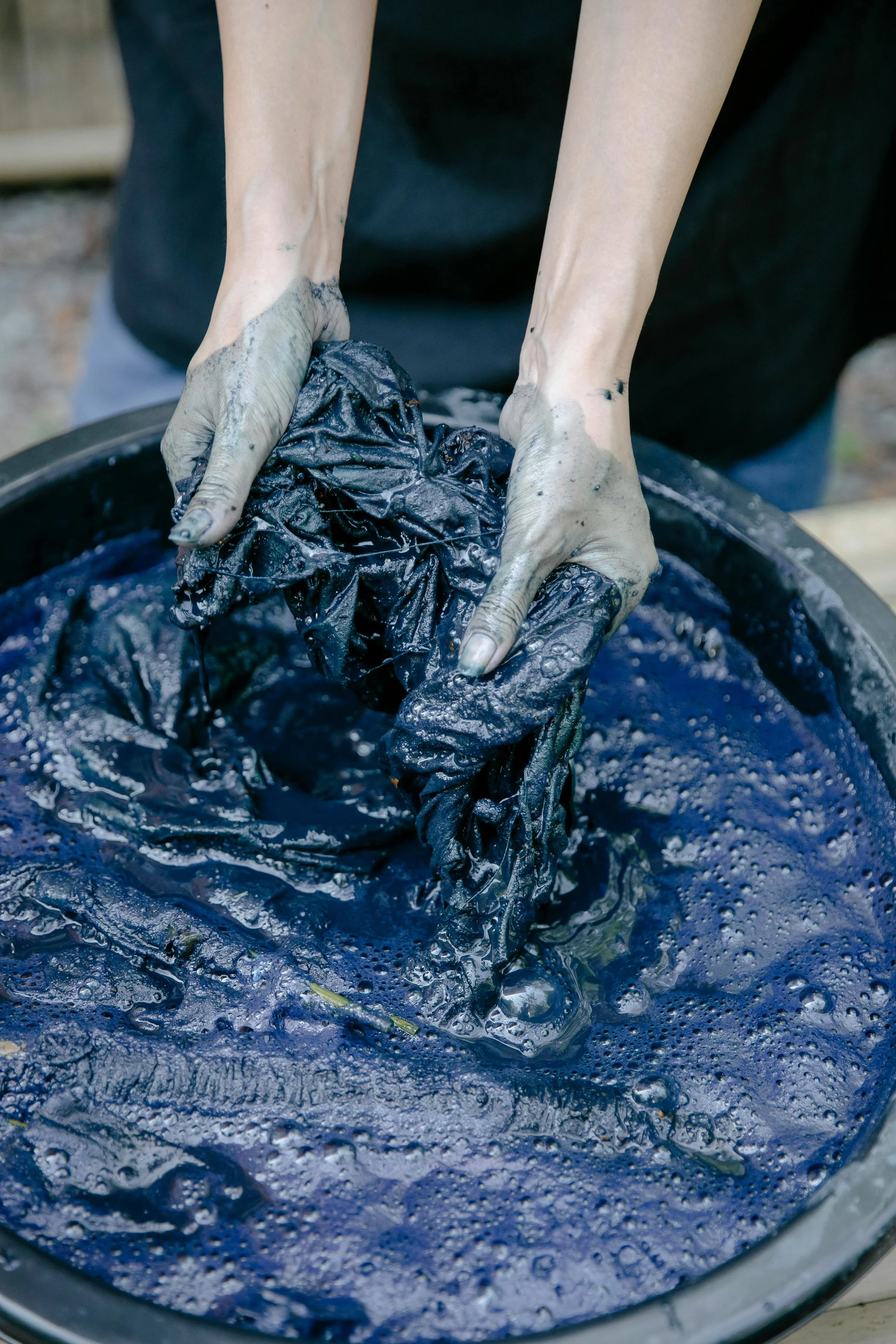
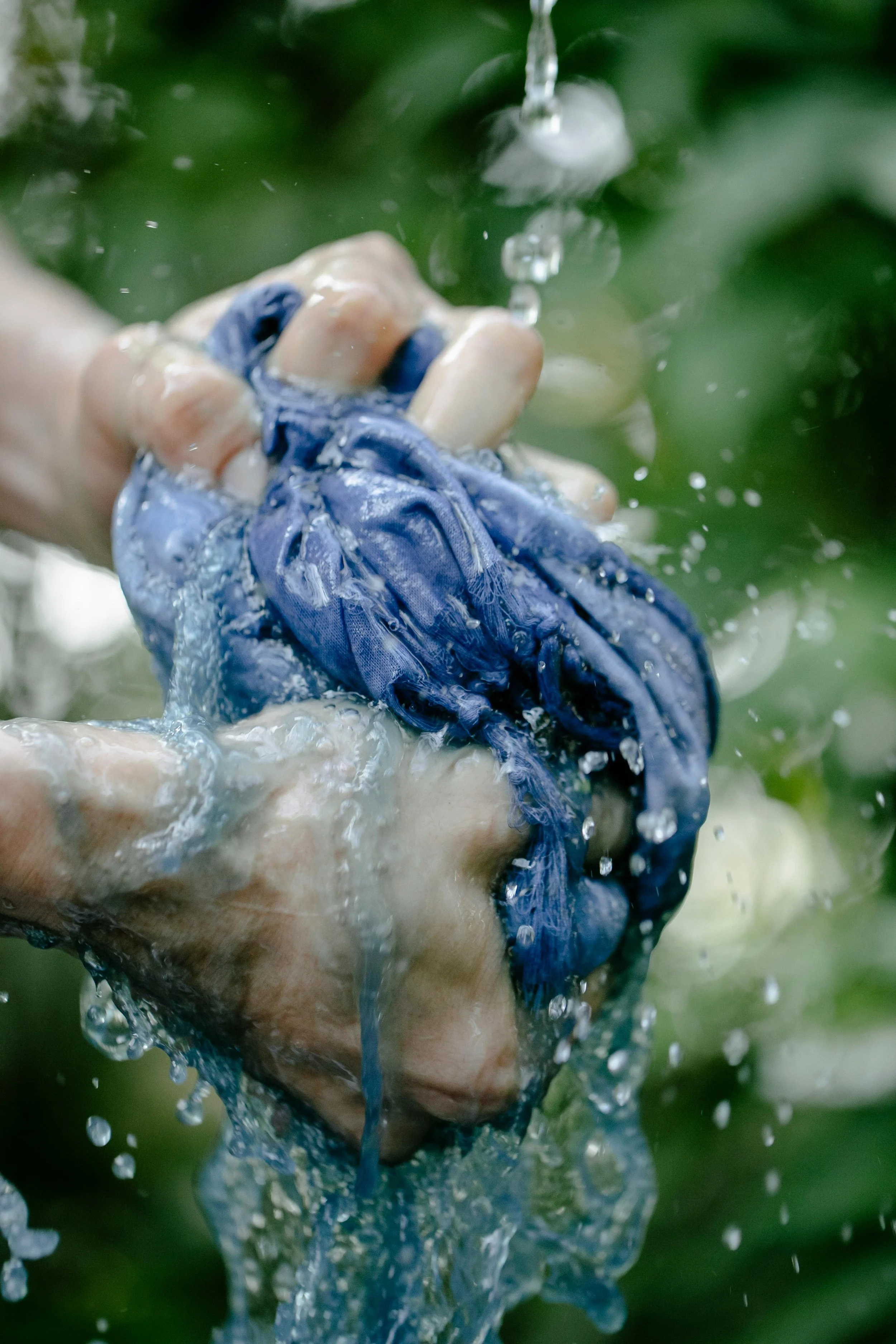
Photos by Teona Swift
The creation of indigo is a practice in patience. Traditional dyers built their vats like living things, feeding them with wheat bran, madder root, rice husks, sometimes fruit or shochu. The bacteria that reduce the indigo require warmth, balance, and attention.
Japanese artisans called this process ai o tateru, meaning "building the indigo", and tended their vats as one tends a slow fire or a sourdough starter. In some traditions, the vat was kept alive for decades, passed down through generations.
The creation process
The leaves are harvested, then steeped in water and left to ferment. Over days, the liquid turns greenish-yellow. It is indoxyl, a soluble compound that must be reduced and transformed before it can bond with cloth.
When cloth enters the vat, it emerges not blue but green. Sometimes gold, sometimes the colour of an unripe olive. And then, exposed to the air, it breathes. The indoxyl oxidises, and the colour deepens. The green gives way to teal, then to the unmistakable, irreversible blue. After all the waiting, all the stirring, all the careful tending, the colour appears in seconds. As if it had been there all along, waiting to be summoned.
Trade and Empire
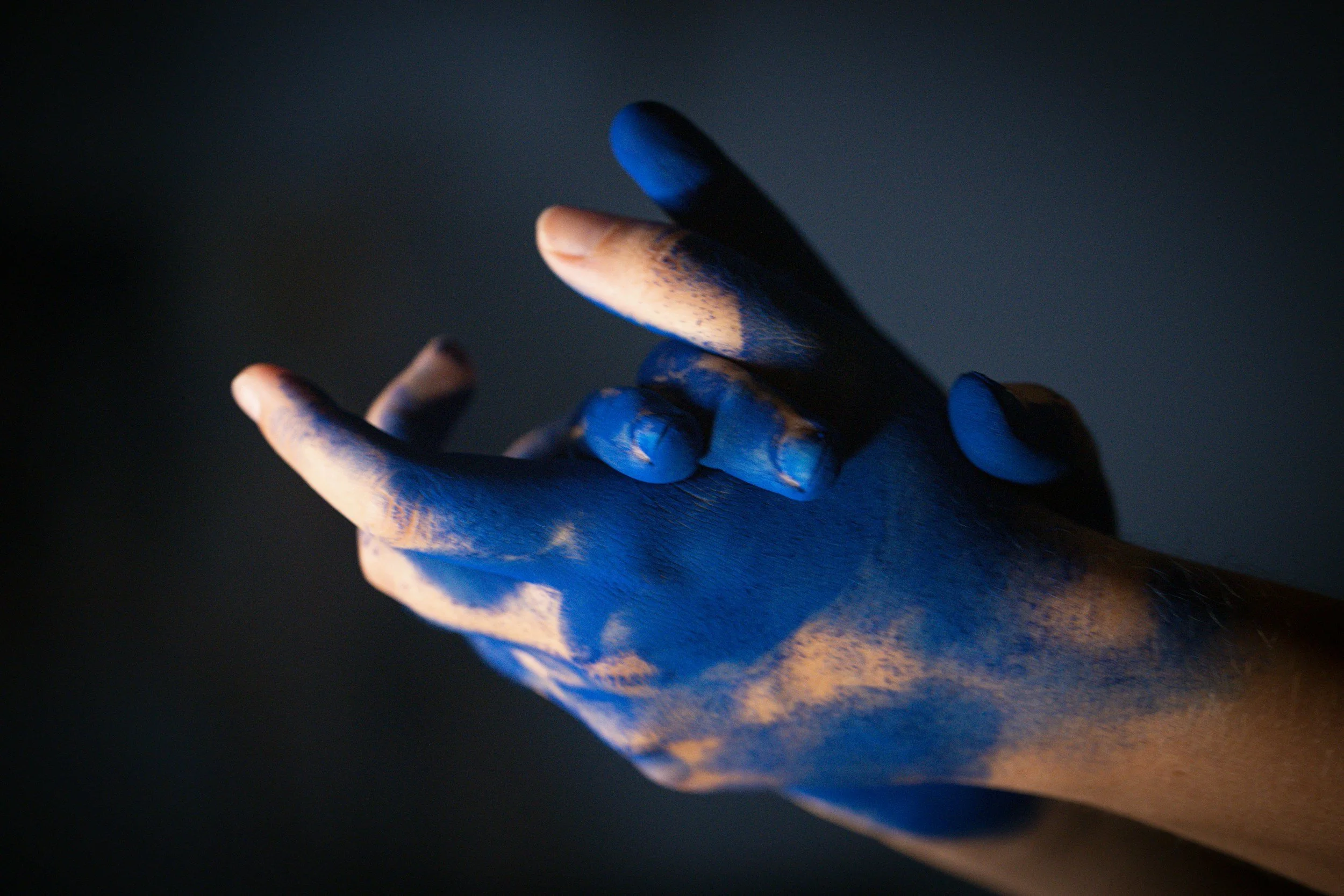
Photo by Rapha Wilde
By the Middle Ages, blue had become currency.
Indian indigo arrived in Europe along the Silk Road, precious and taxed at every border. For centuries, European dyers relied instead on woad, which yields the same dye but in far smaller quantities (one thirtieth of the output of tropical indigo). Woad built fortunes. It made cities. Toulouse, Albi, Carcassonne, the "Pays de Cocagne", grew rich on blue, their merchants trading in dried balls of fermented woad paste.
When Portuguese ships opened sea routes to India in the sixteenth century, everything changed. Suddenly, indigo was cheaper, stronger, more plentiful. The woad merchants protested. France and Germany banned the imported dye, calling it "the devil's colour." The laws did not hold. By the seventeenth century, indigo had conquered Europe.
And with that conquest came darker histories.
By the Middle Ages, blue had become currency.
Indian indigo arrived in Europe along the Silk Road, precious and taxed at every border. For centuries, European dyers relied instead on woad, which yields the same dye but in far smaller quantities (one thirtieth of the output of tropical indigo). Woad built fortunes. It made cities. Toulouse, Albi, Carcassonne, the "Pays de Cocagne", grew rich on blue, their merchants trading in dried balls of fermented woad paste.
When Portuguese ships opened sea routes to India in the sixteenth century, everything changed. Suddenly, indigo was cheaper, stronger, more plentiful. The woad merchants protested. France and Germany banned the imported dye, calling it "the devil's colour." The laws did not hold. By the seventeenth century, indigo had conquered Europe.
And with that conquest came darker histories.
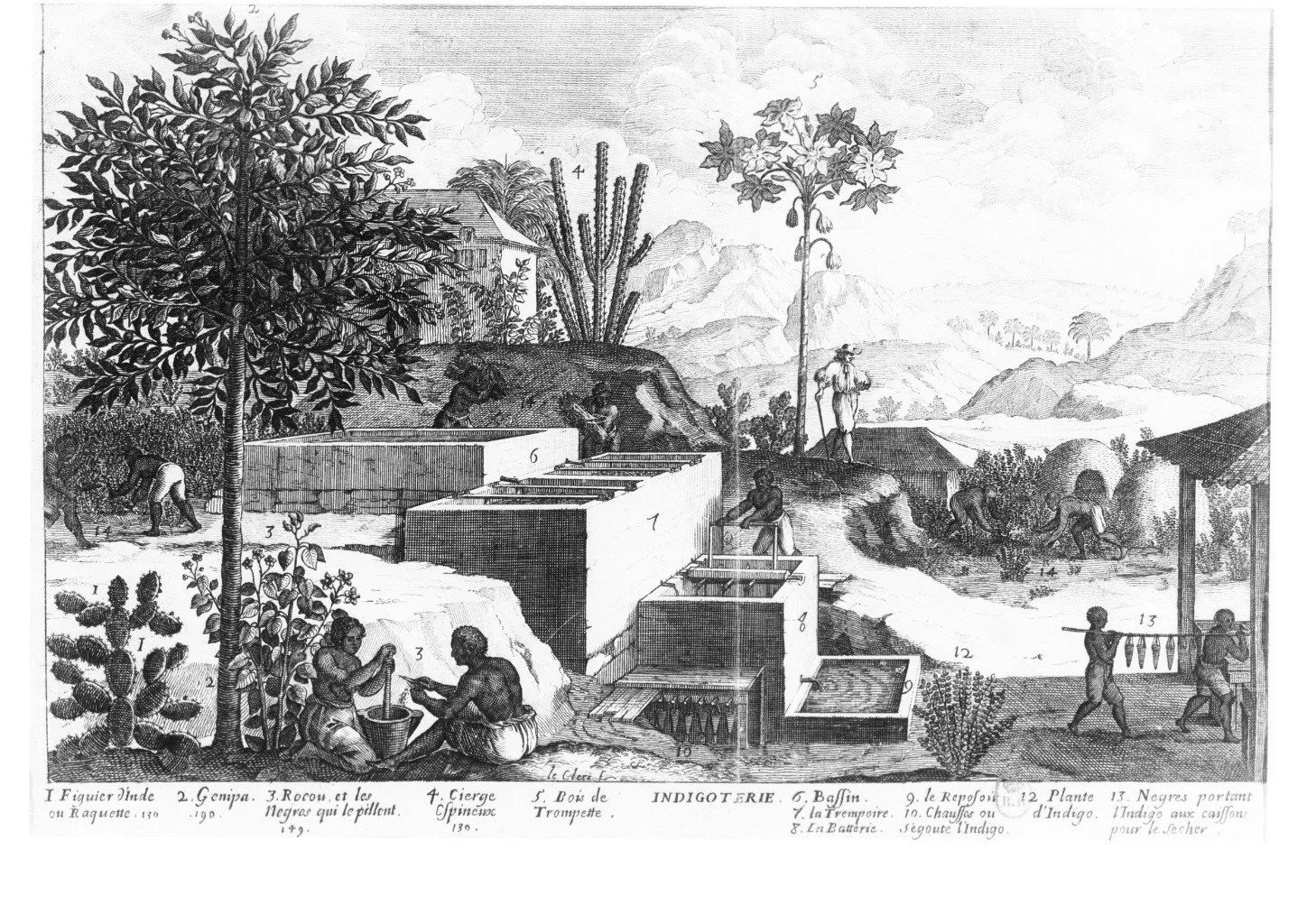
The Indigo Plant Farm by Jean-Baptiste du Tertre
The Indigo Revolt
By the mid-nineteenth century, farmers were being forced to grow indigo for European planters instead of food for their own families. The soil was exhausted. The payments were meagre. Contracts were signed under coercion, and debt tightened like a fist. In 1859, the growers refused. What followed became known as the Indigo Revolt, or the Neel Bidroha. Villagers withheld labour, attacked factories, and testified against planters in court. It was one of the first organised peasant uprisings against British rule in India. The rebellion did not end indigo production overnight, but it exposed the violence embedded in its cultivation. Blue was no longer only a colour of trade. It had become a colour of protest.
When we wear indigo today, we inherit this weight. The beauty of the dye is inseparable from the hands that made it. The millions of hands, through centuries, that cultivated and fermented and dipped and wrung, often without choice.
The colour of work
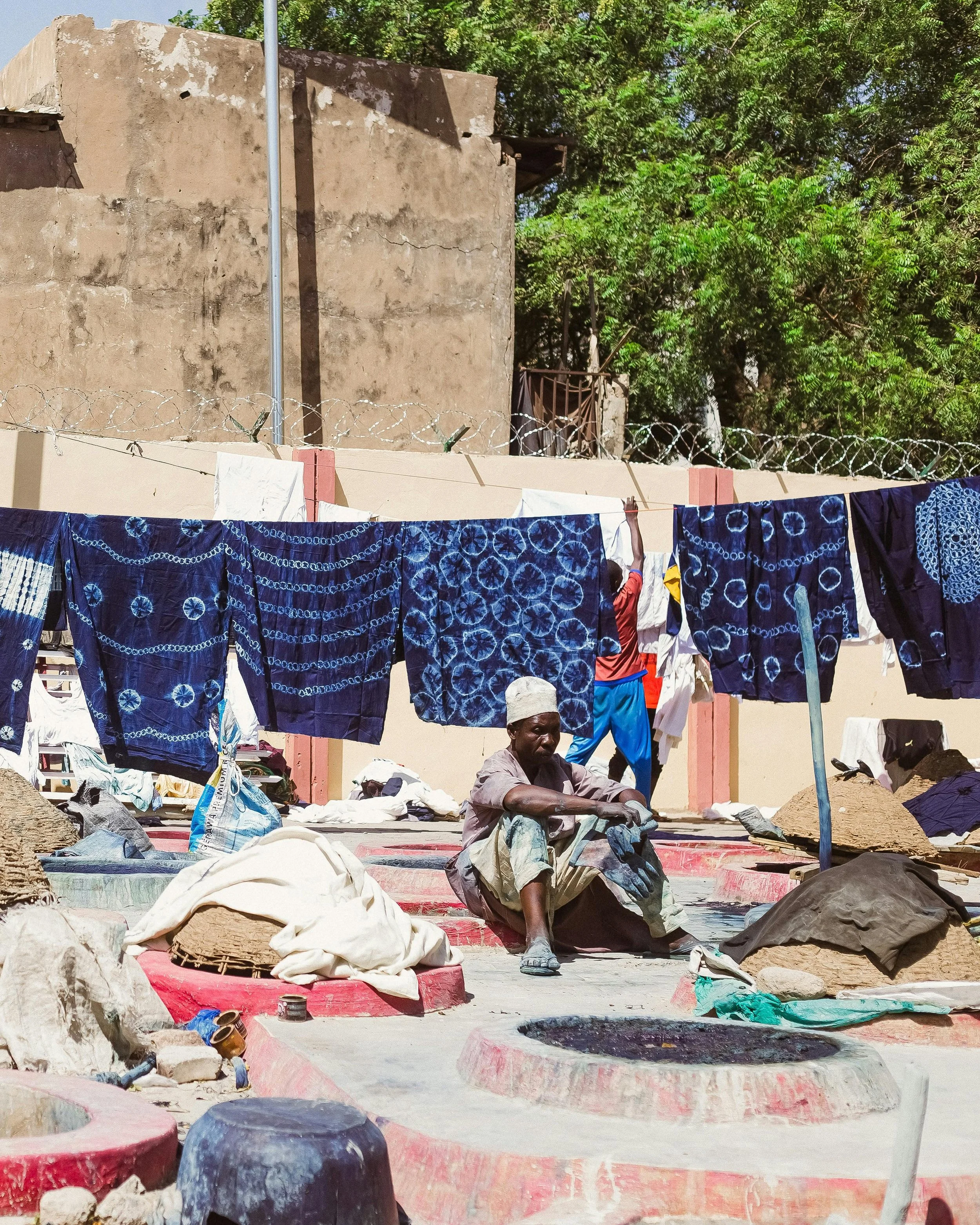
Photo by Umar Faruq
But indigo has another story, too. In some places, it was the colour of industry.
In Japan, during the Edo period (1603 to 1868), strict sumptuary laws forbade commoners from wearing expensive dyes like safflower red or bright purples. But indigo, grown locally from tade-ai, was accessible. It was what farmers, fishermen and craftspeople could afford.
And so cotton dyed in ai became the fabric of the working class: deep blue jackets reinforced with sashiko stitching, trousers that softened and faded with every season. Indigo was practical as well as beautiful. Its natural compounds were believed to repel insects and snakes, making it the colour of choice for those who bent over rice paddies from dawn to dusk.
From East to West
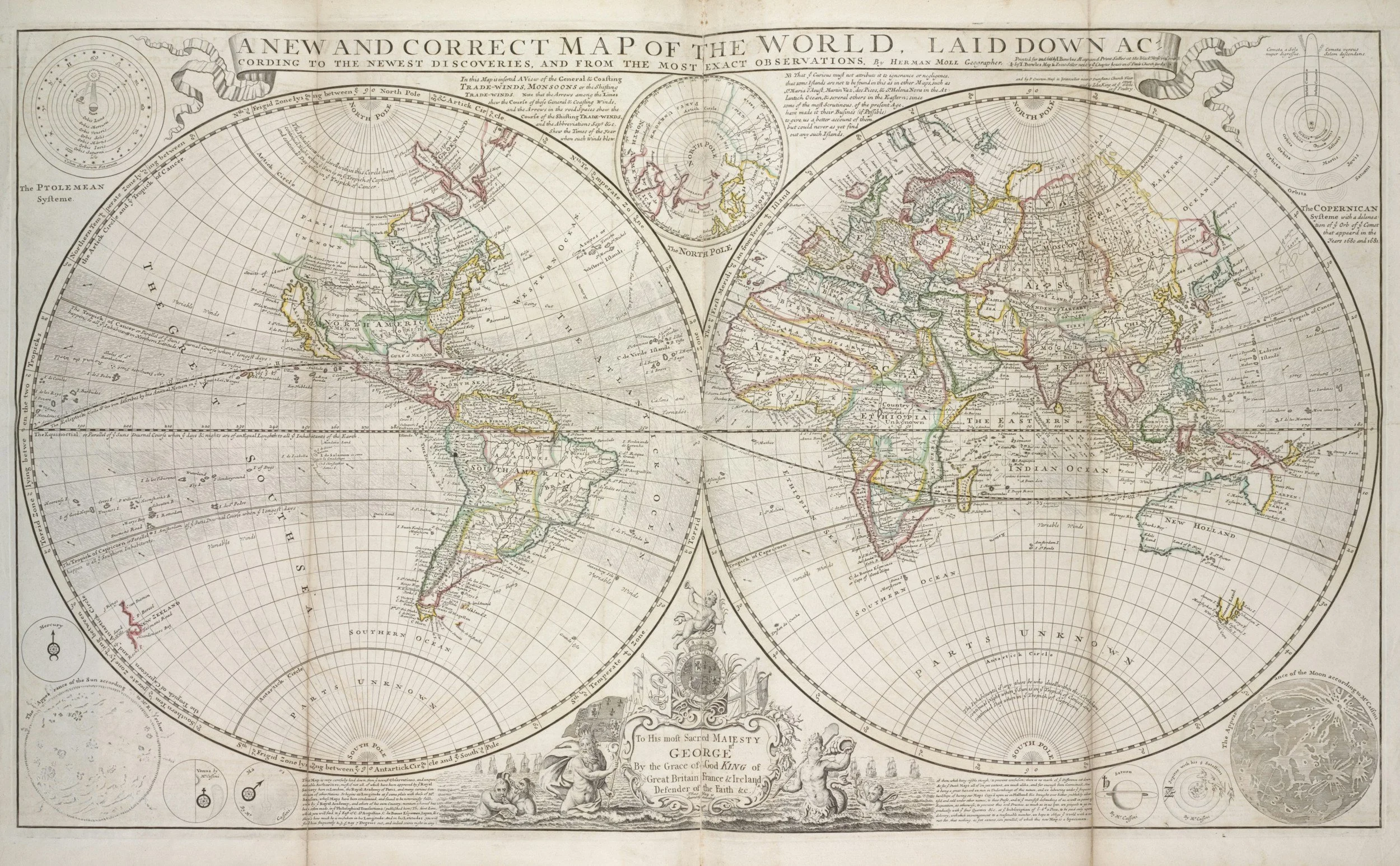
The New York Public Library
By the late nineteenth century, after indigo had flooded European markets through colonial trade, it became cheap enough to clothe workers in the West, too. In France, factory workers, railwaymen and farmers adopted the bleu de travail, the work blue, a simple cotton jacket dyed deep indigo to hide the stains of oil and earth and sweat. The chore coat. The coverall. A garment so humble it needed no ornament, only pockets.
And in America, the same impulse produced denim: a twill weave with indigo-dyed warp threads and undyed weft. In 1873, Levi Strauss patented the riveted work trousers for miners and labourers of the American West.
What had once been the colour of kings had become the colour of honest work. Indigo absorbed the marks of use. It improved with wear. Where other dyes held fast, indigo softened, its surface breaking down, revealing layers of colour beneath, until each garment told the story of the body that had worn it.
The Synthetic shift
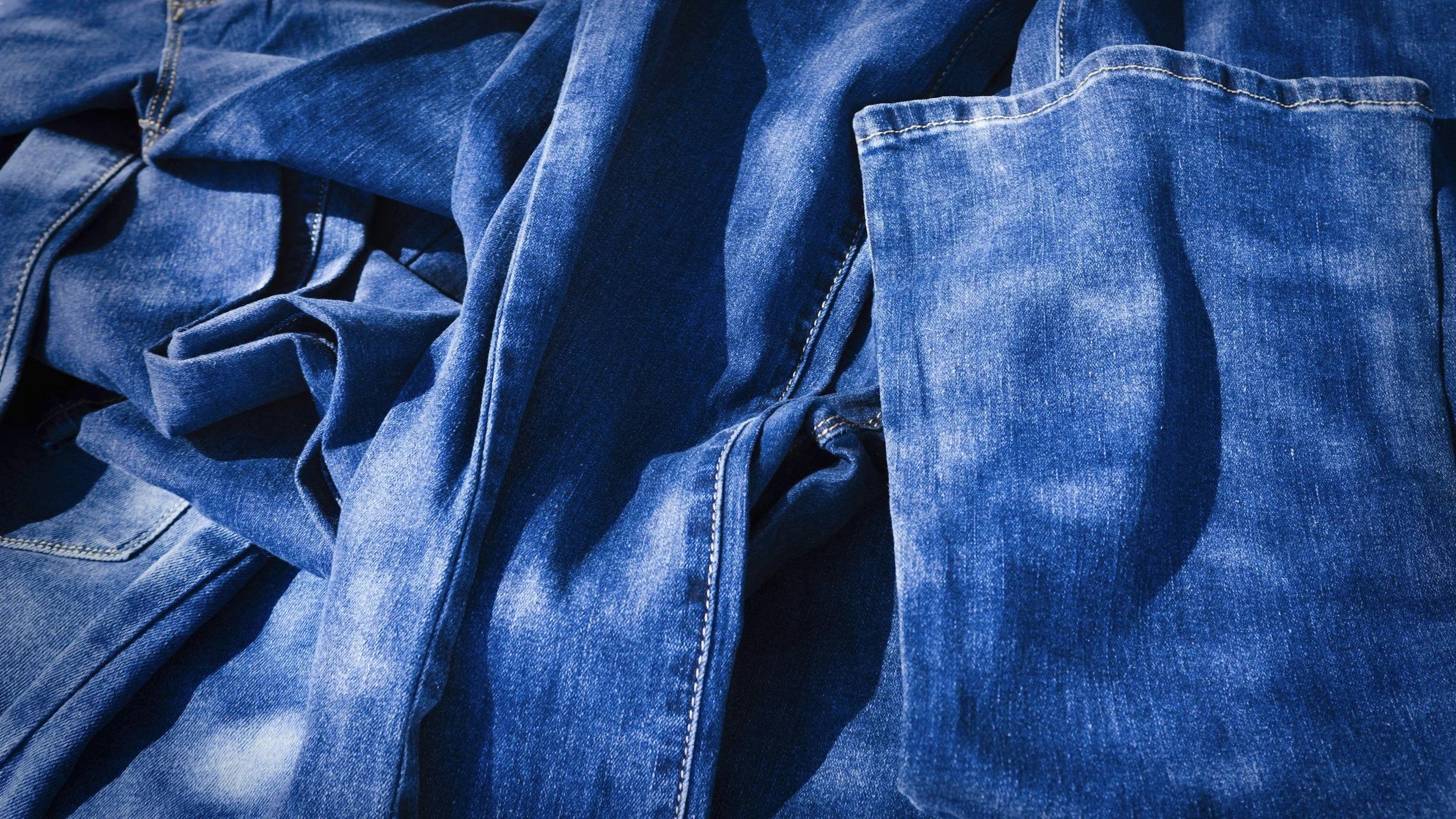
Photo by Eric Prouzet
In 1897, the German chemical company BASF perfected synthetic indigo.
Within a decade, natural indigo production had collapsed. The vast plantations of Bengal, which had supplied Europe for centuries, fell silent. The living vats, the fermentation pits, the generations of knowledge — all became obsolete. Synthetic indigo was cheaper, more consistent, and required no relationship with soil or season.
Today, 80,000 tonnes of indigo are produced each year. Almost all of it is synthetic. It colours the denim we wear without thinking, the fast fashion that arrives and departs within a single season.
The Indigo Renaissance
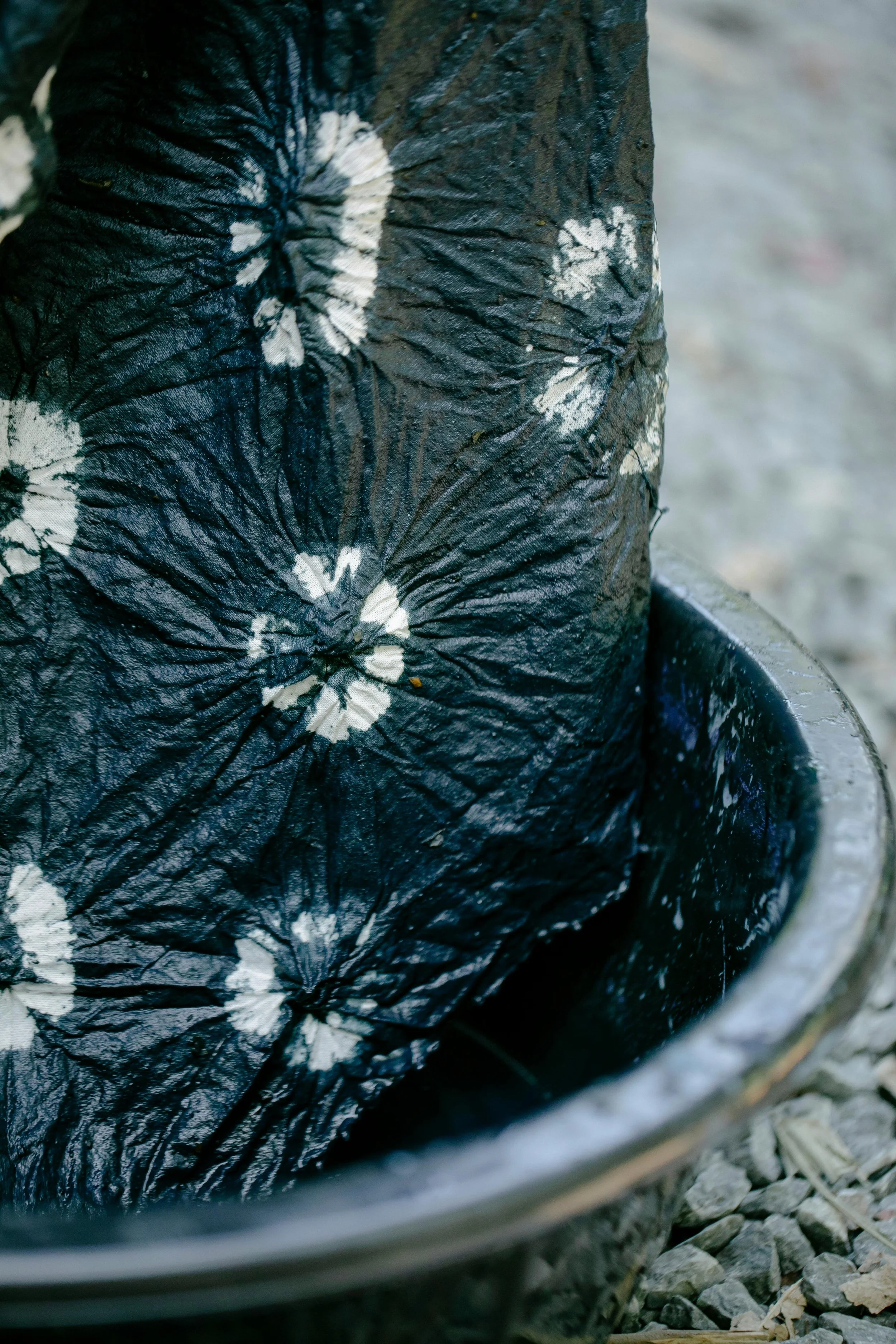
Photo by Teona Swift
In Tamil Nadu, four-generation farms still grow Indigofera, still harvest and ferment, and press the dye into cakes by hand. In Tokushima, artisans maintain fermentation vats using methods unchanged for six hundred years, building the indigo with lye and wheat bran and patience, dyeing cloth that will last lifetimes.
In studios from Morocco to Mexico to the English countryside, a new generation of natural dyers is returning to the vat. What they have found is this: synthetic indigo may be identical in molecular structure, but it is not the same. A chemically reduced vat does not breathe like a fermented one. A factory-dyed fabric does not age like cloth that has been dipped, lifted, aired, dipped again, its colour built layer by layer through contact with living bacteria and open sky.
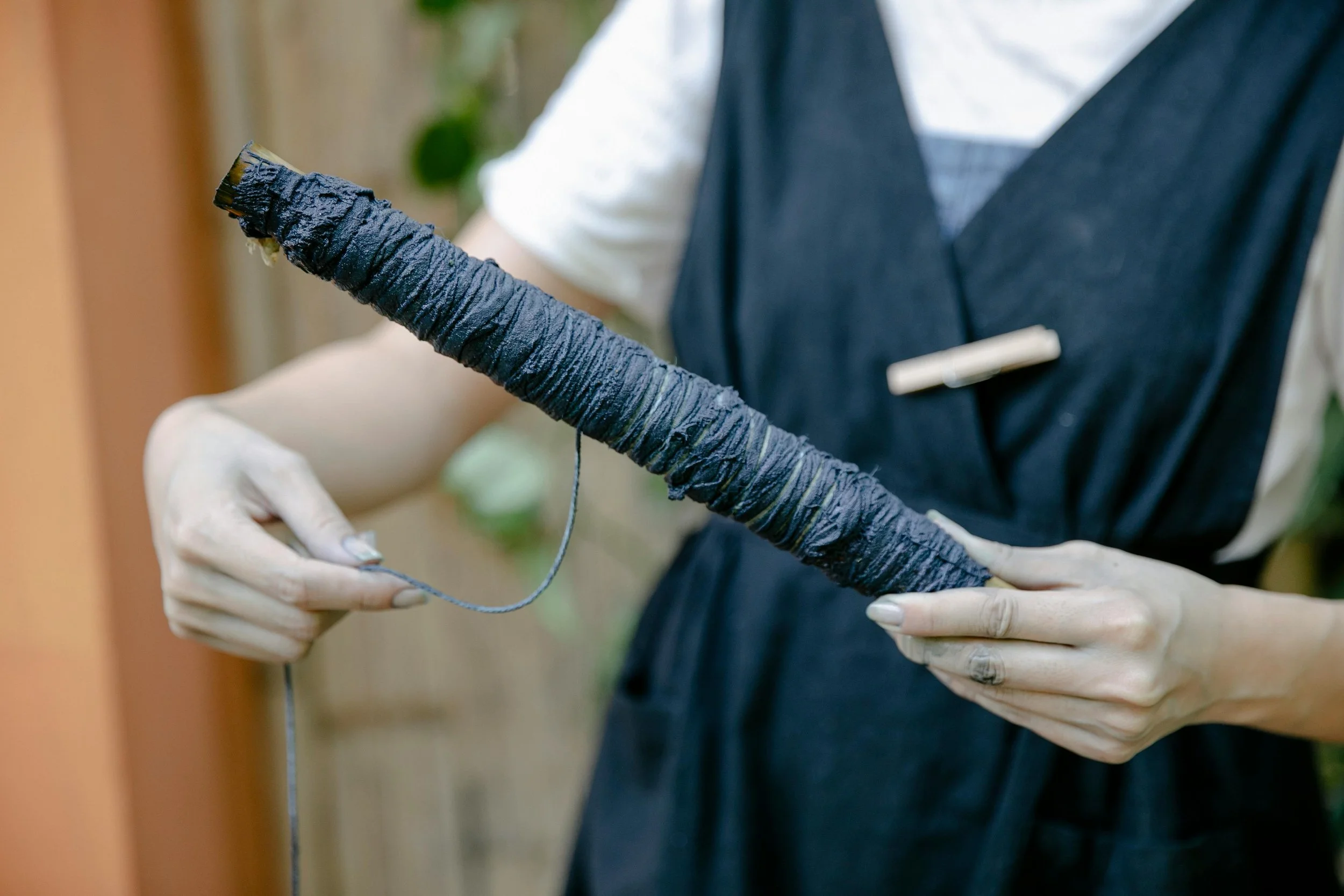
Photo by Teona Swift
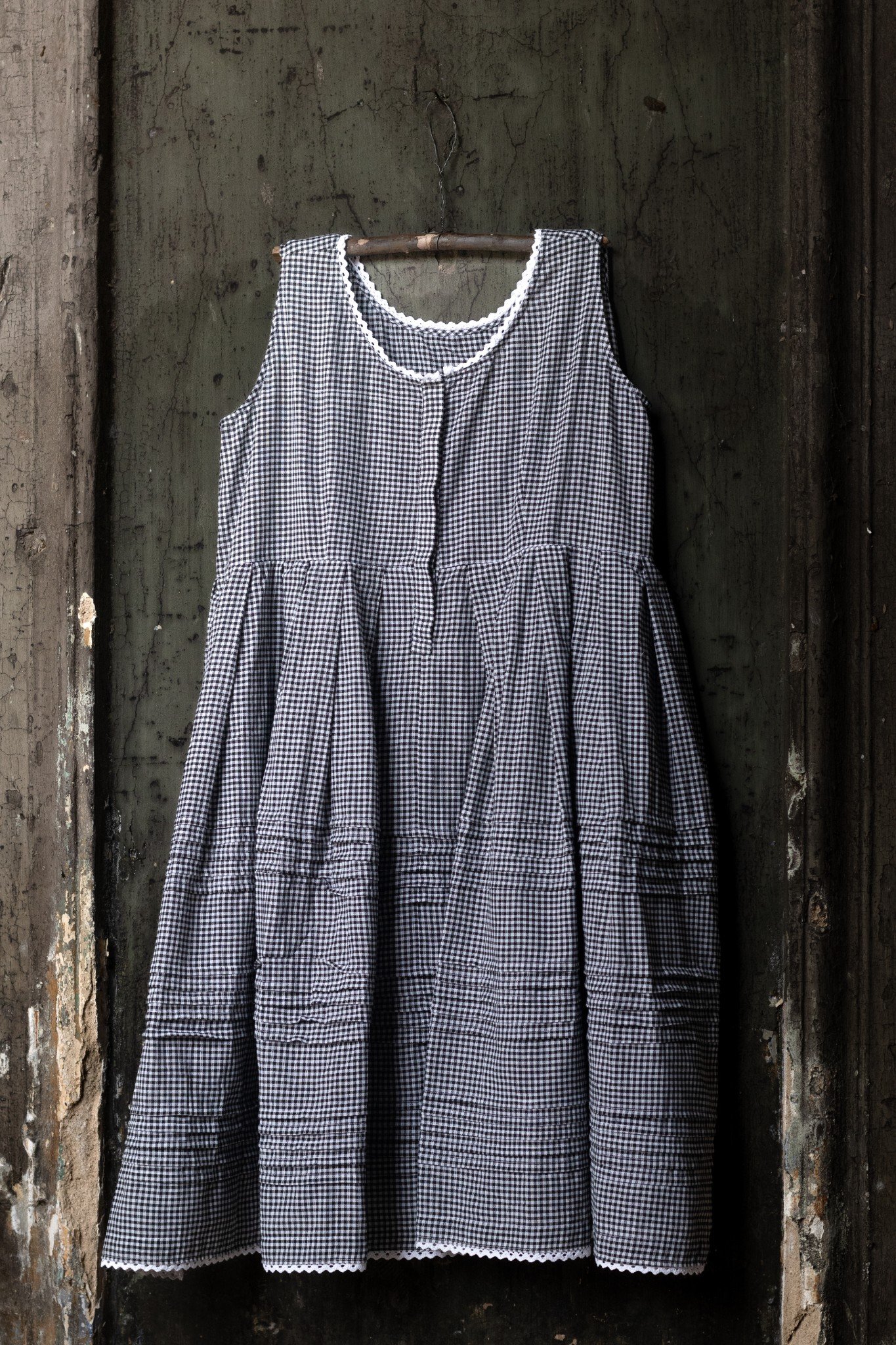
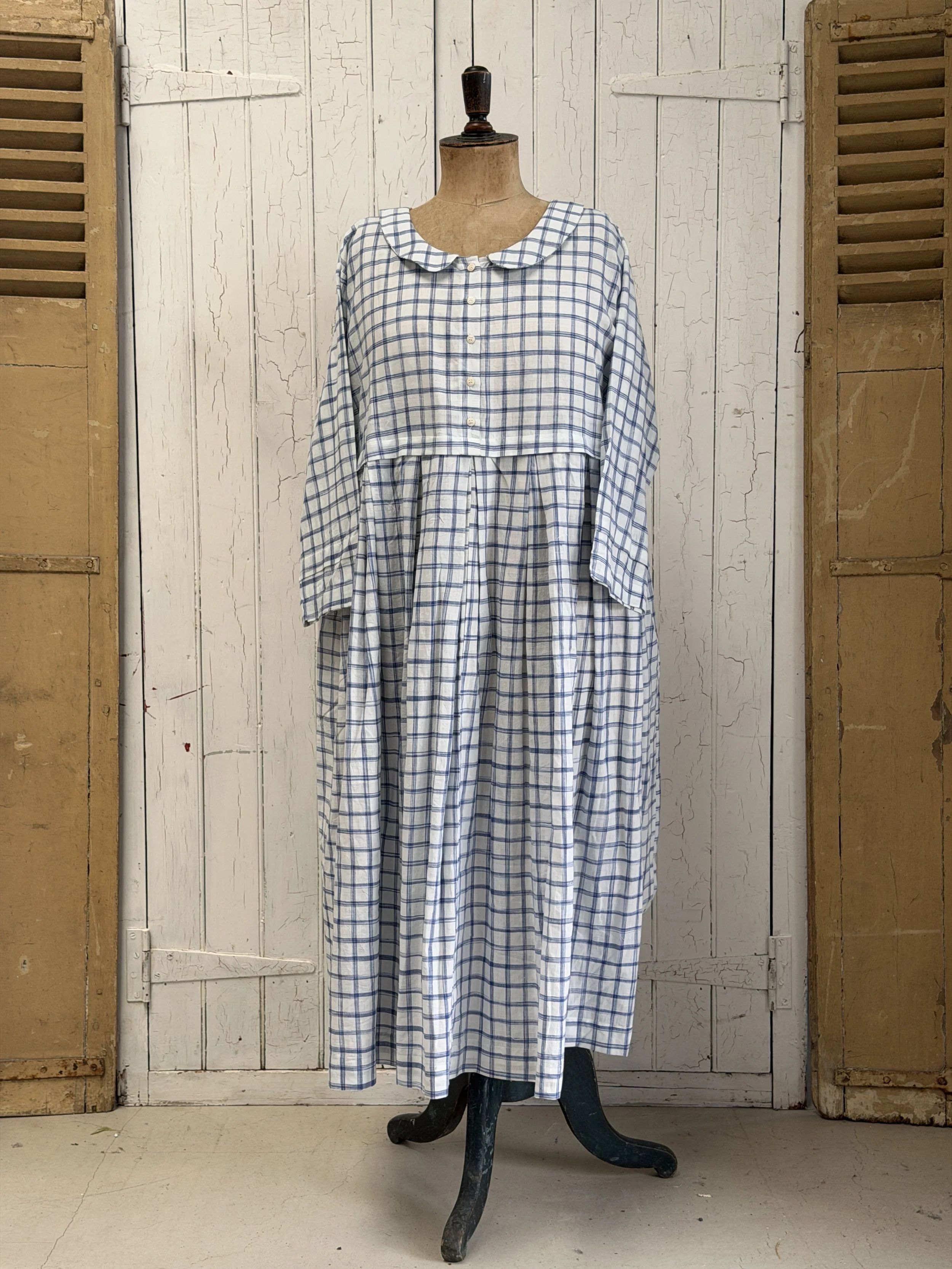
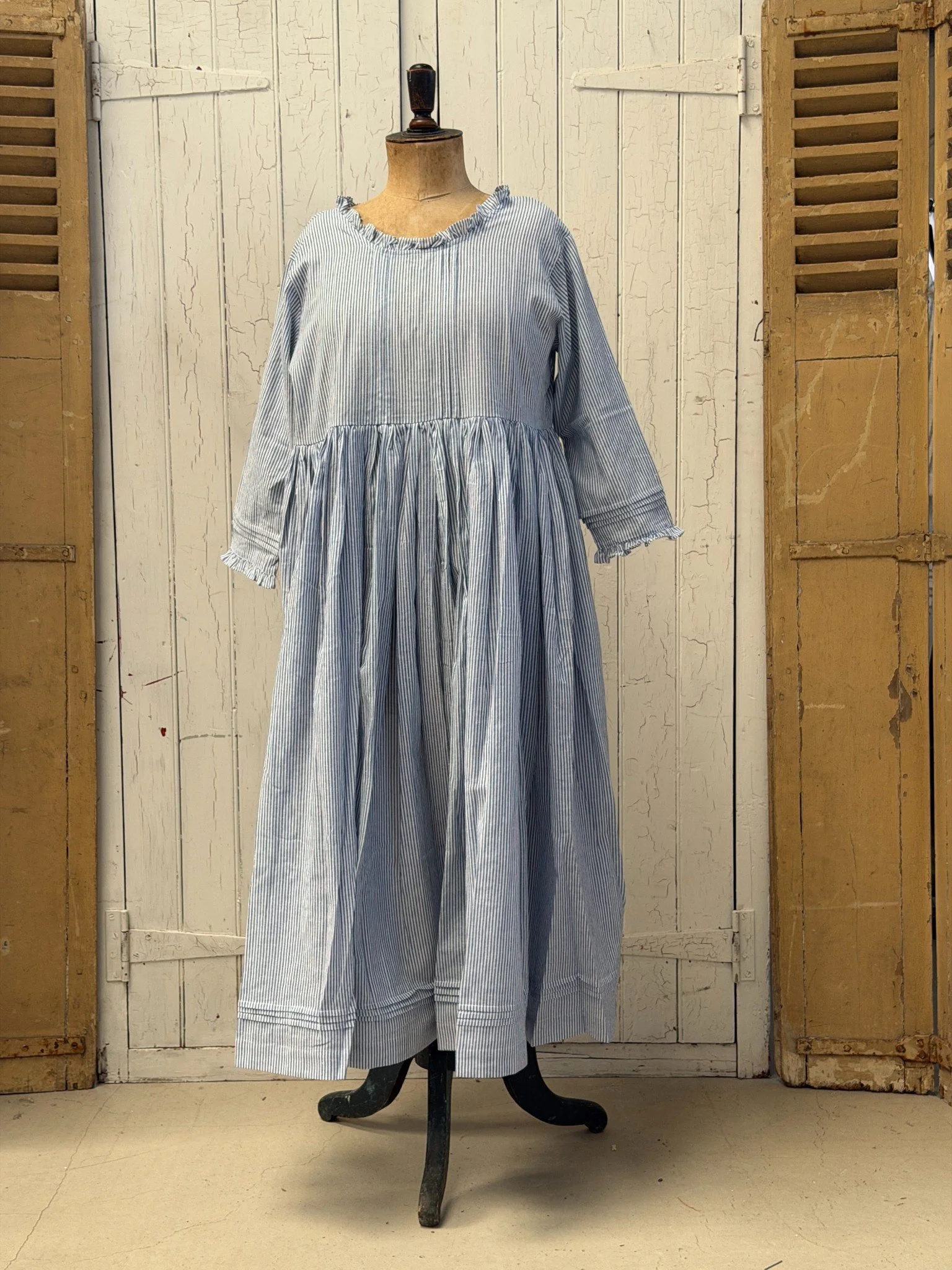
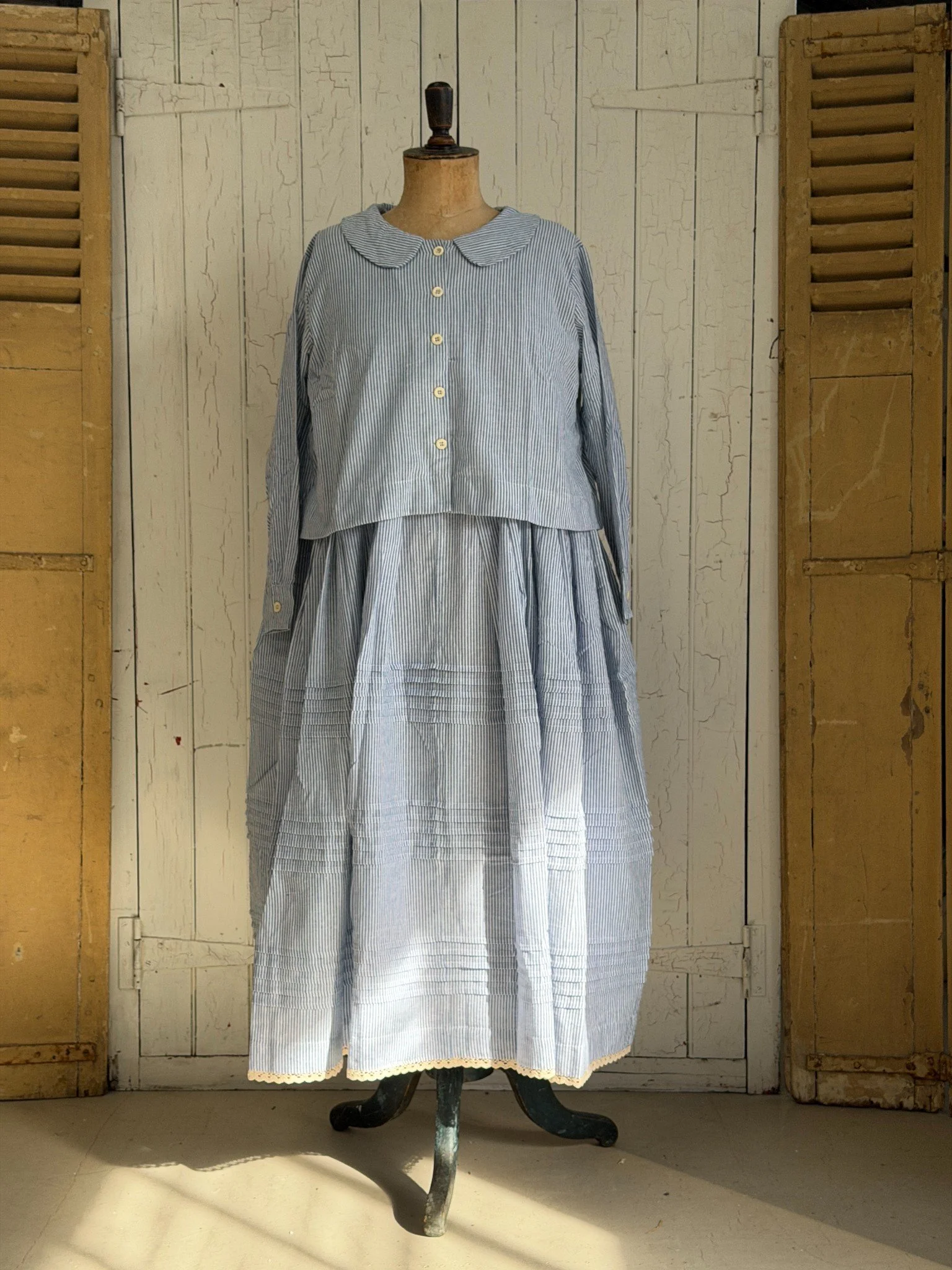
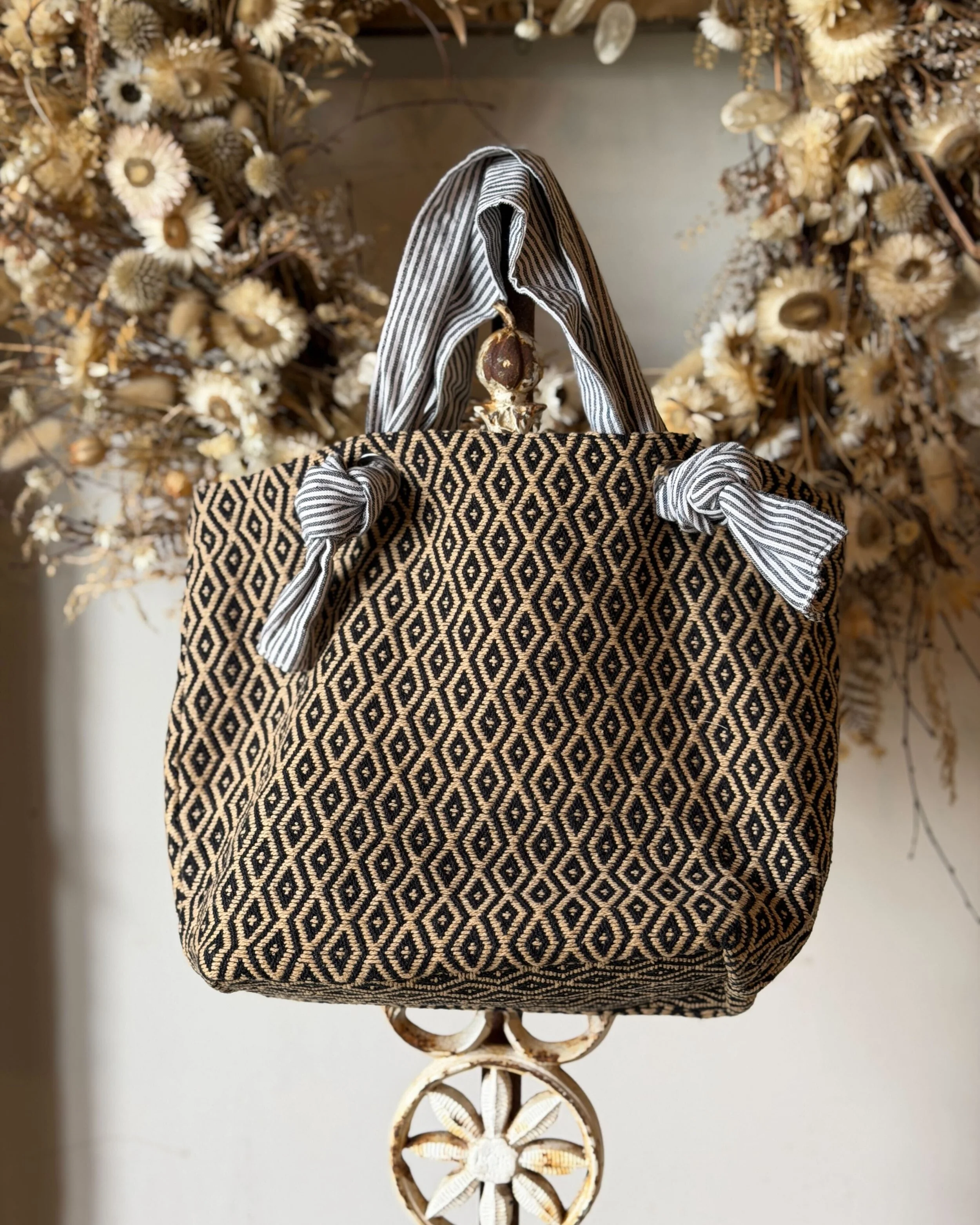
For our Blueprints collection, we have worked with yarns dyed indigo, woven into checks, stripes and plains. Echoes of blue gold, made to slip easily amongst your Acre wardrobe.
Our primary focus this season has been working with weavers in West Bengal to produce hand-loomed cottons and linens. They are regarded as some of the finest weavers in the world. We will be sharing more of this story later in the year.
Pre-orders of our Blueprints Collection are available now, with shipping from the beginning of May, and at our events throughout the summer. We only make in small quantities, so please do browse the collection below.
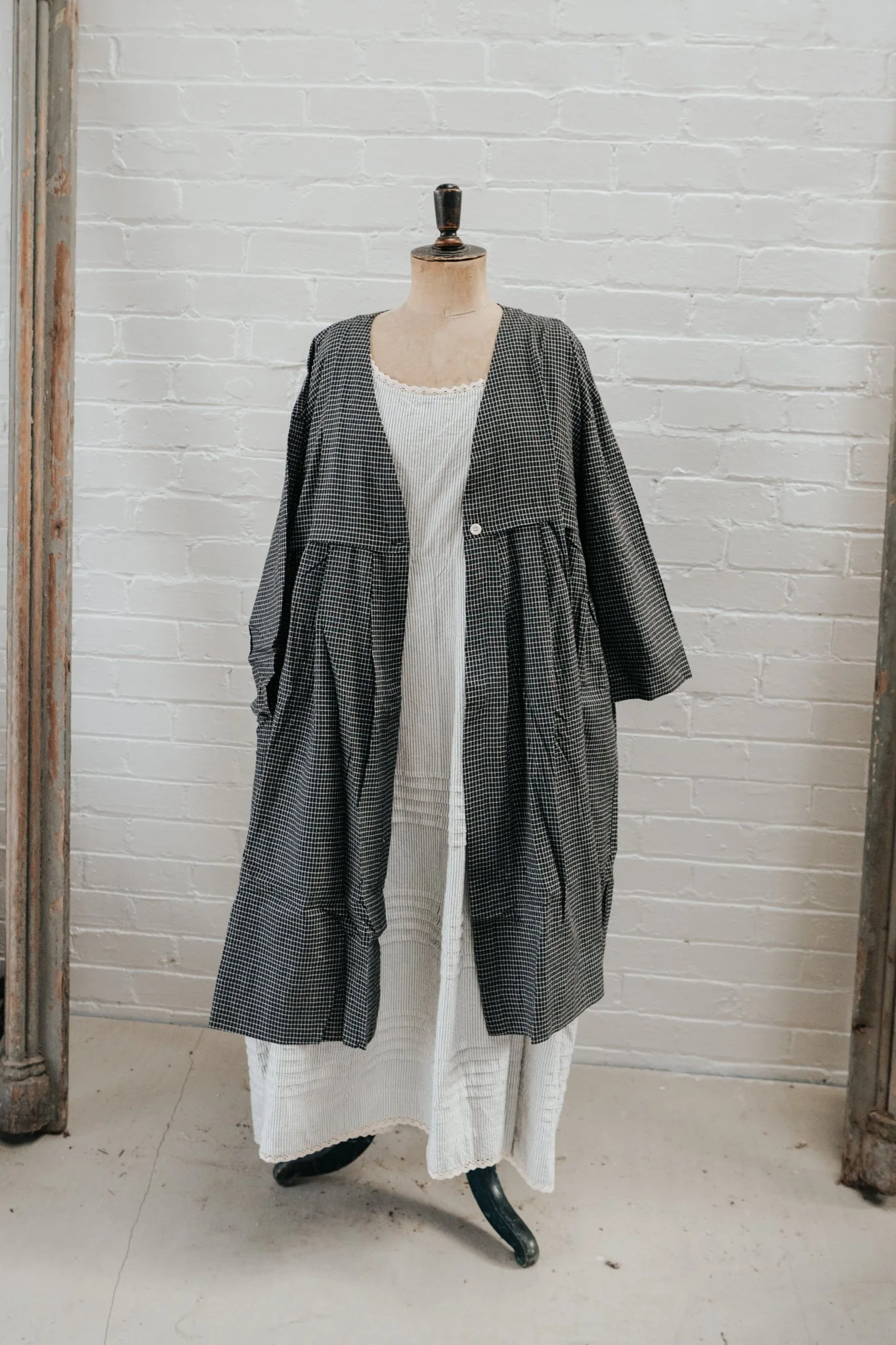
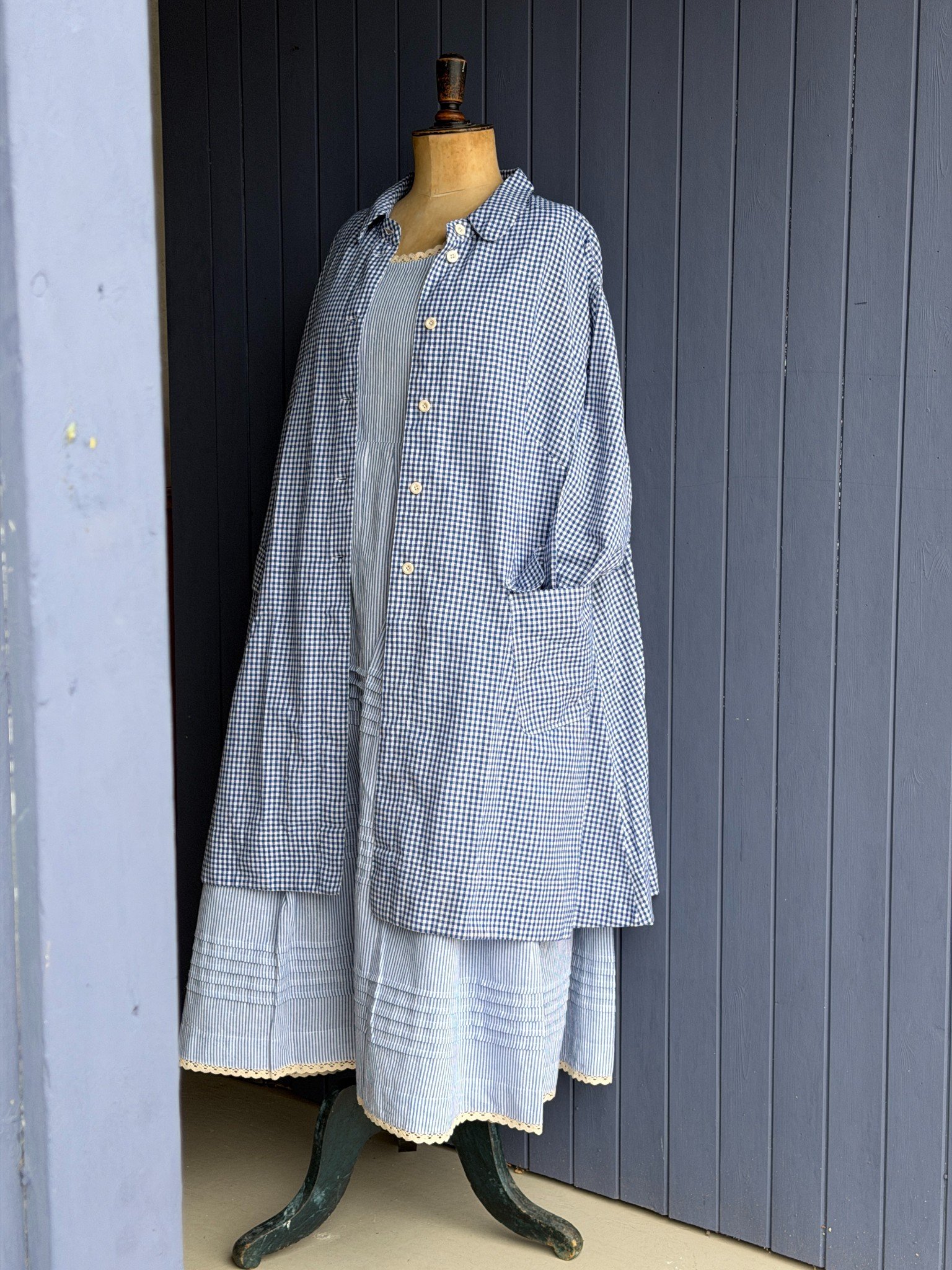
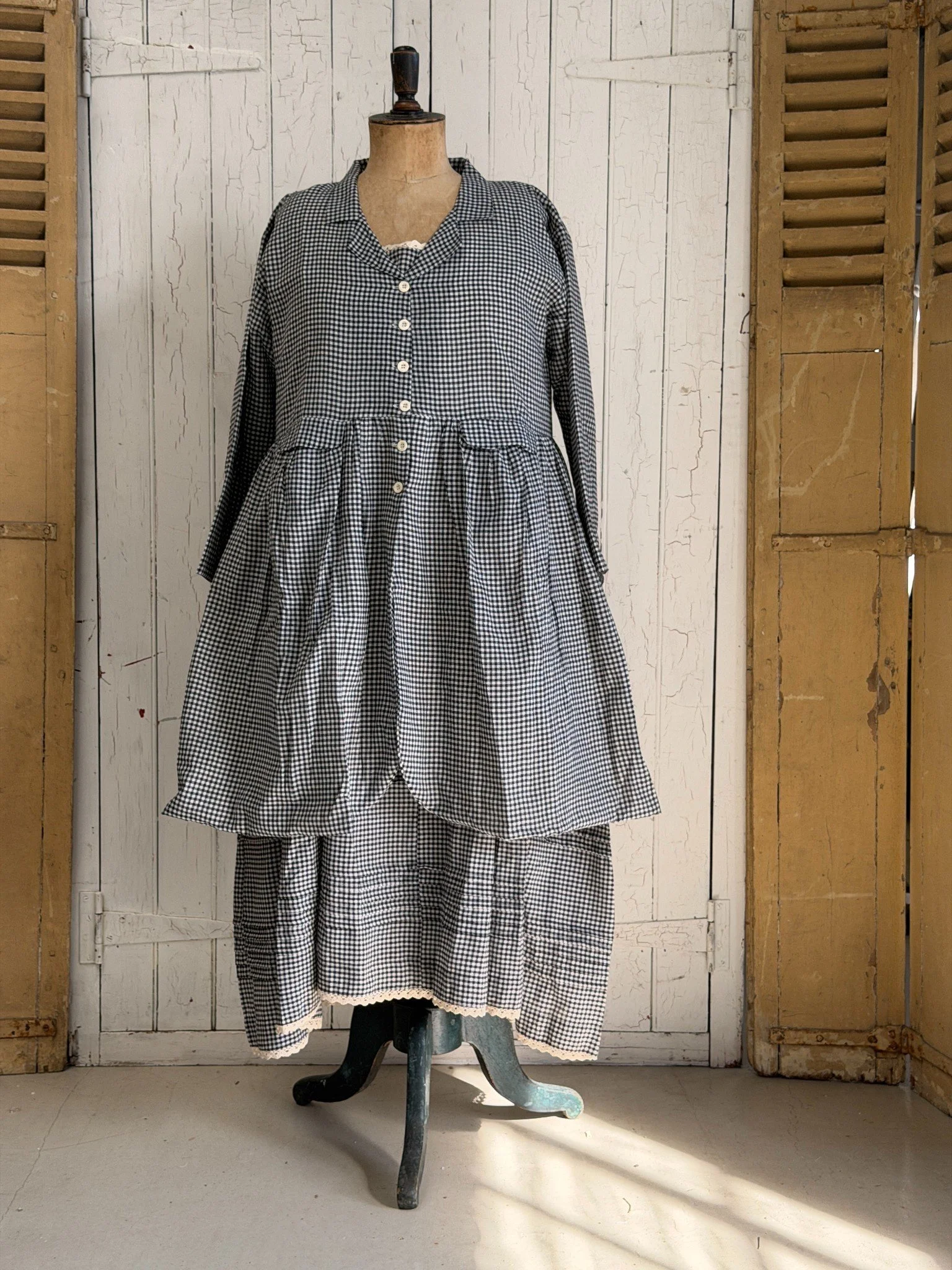
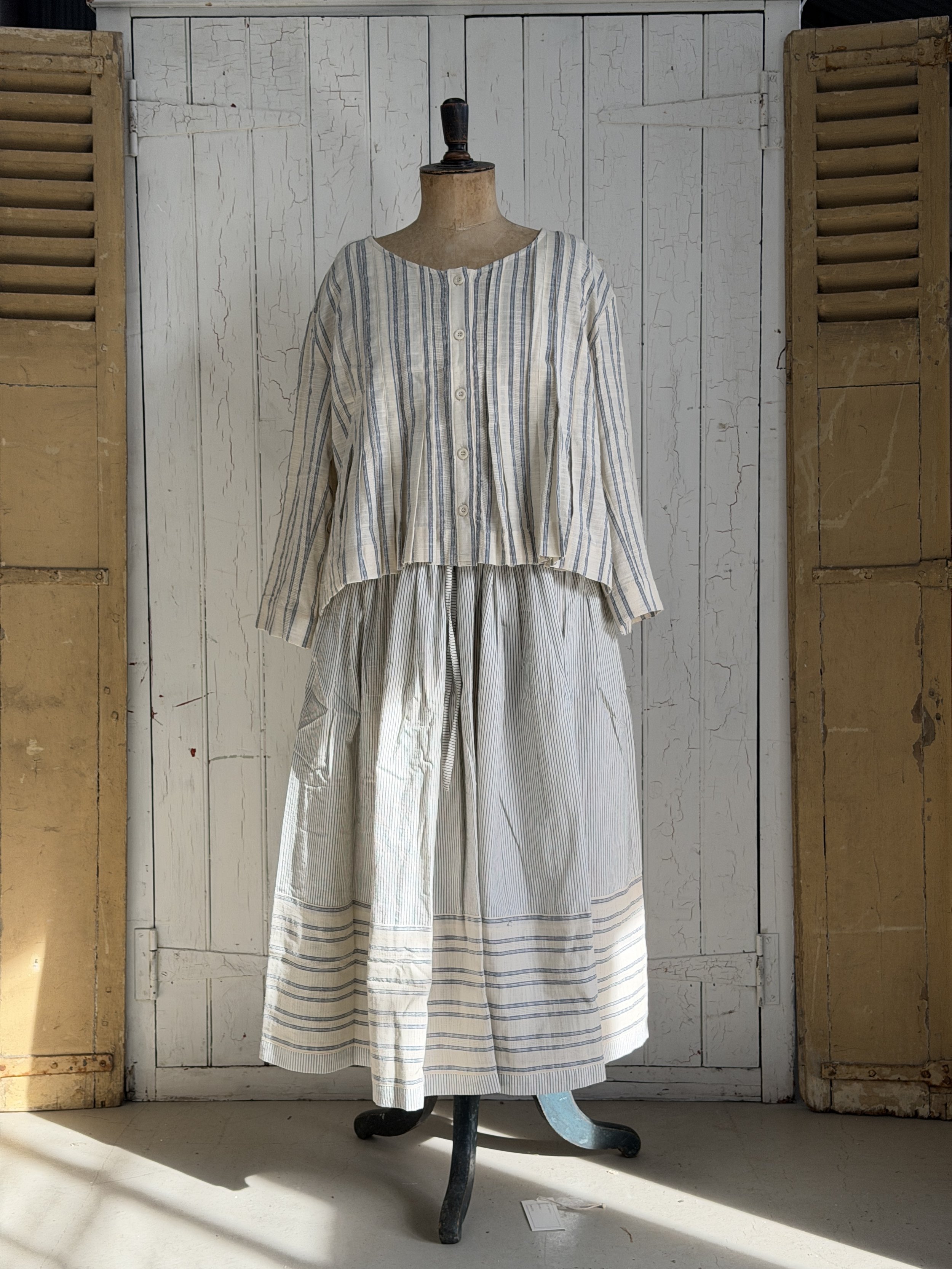
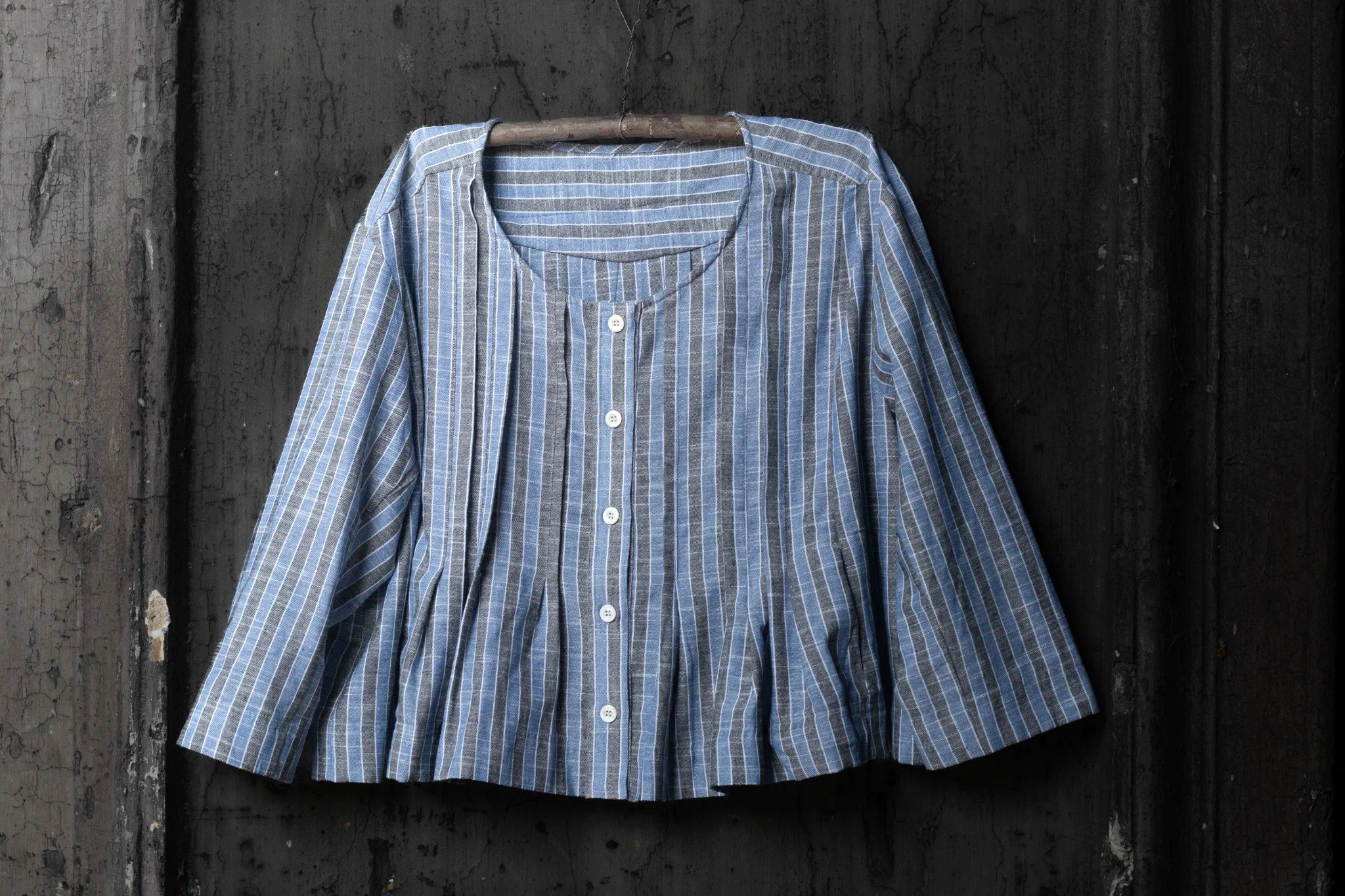
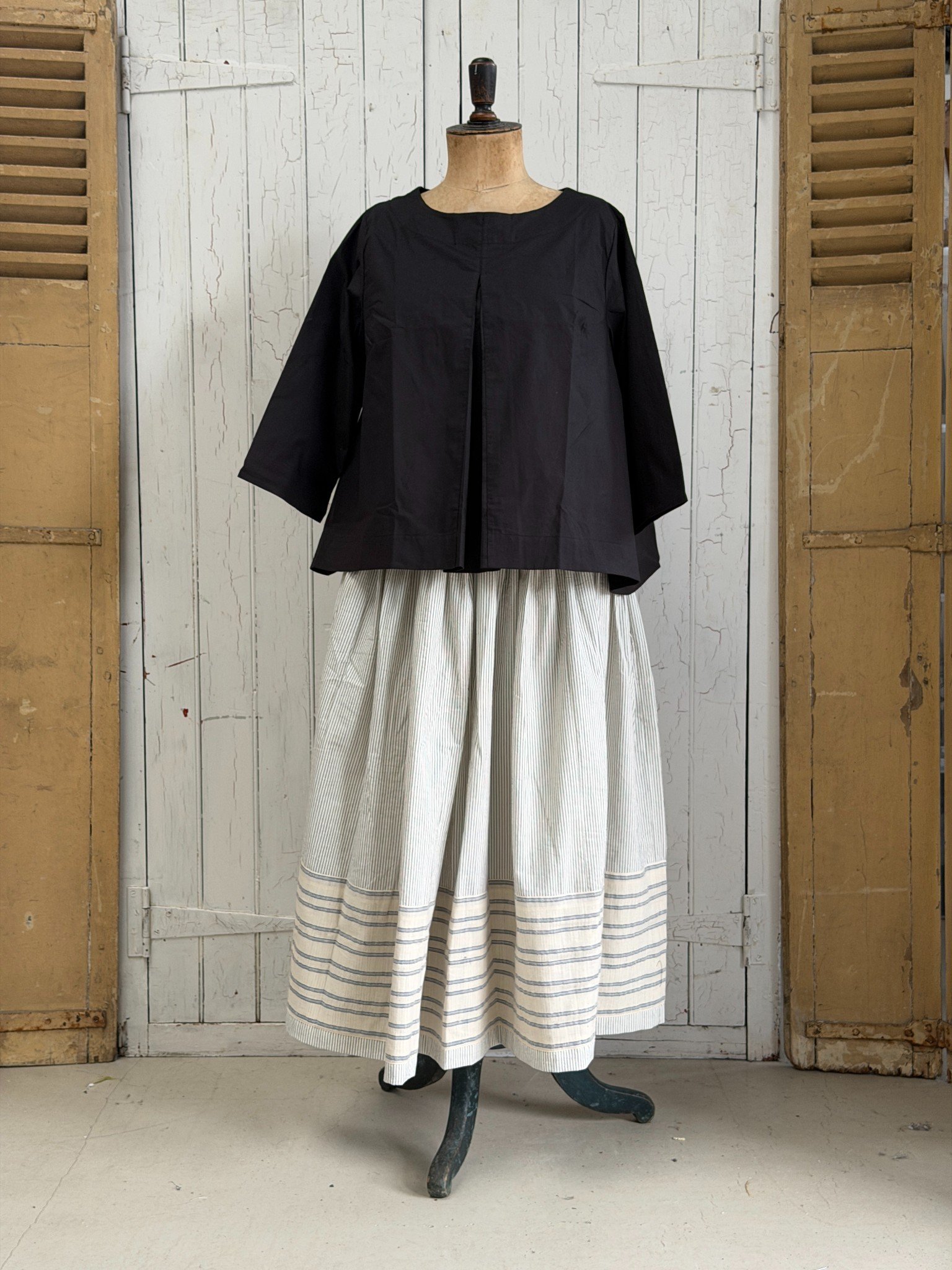
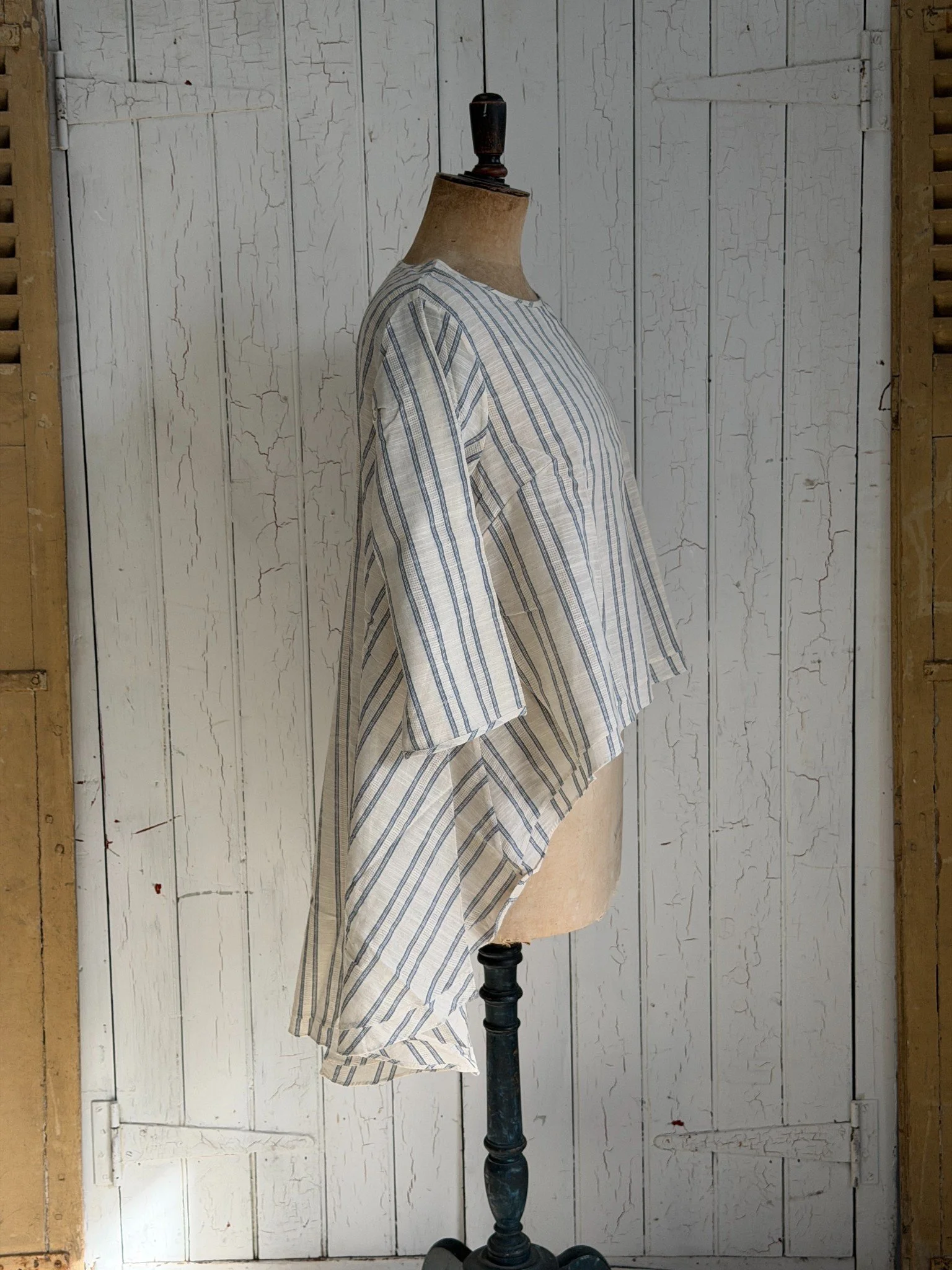
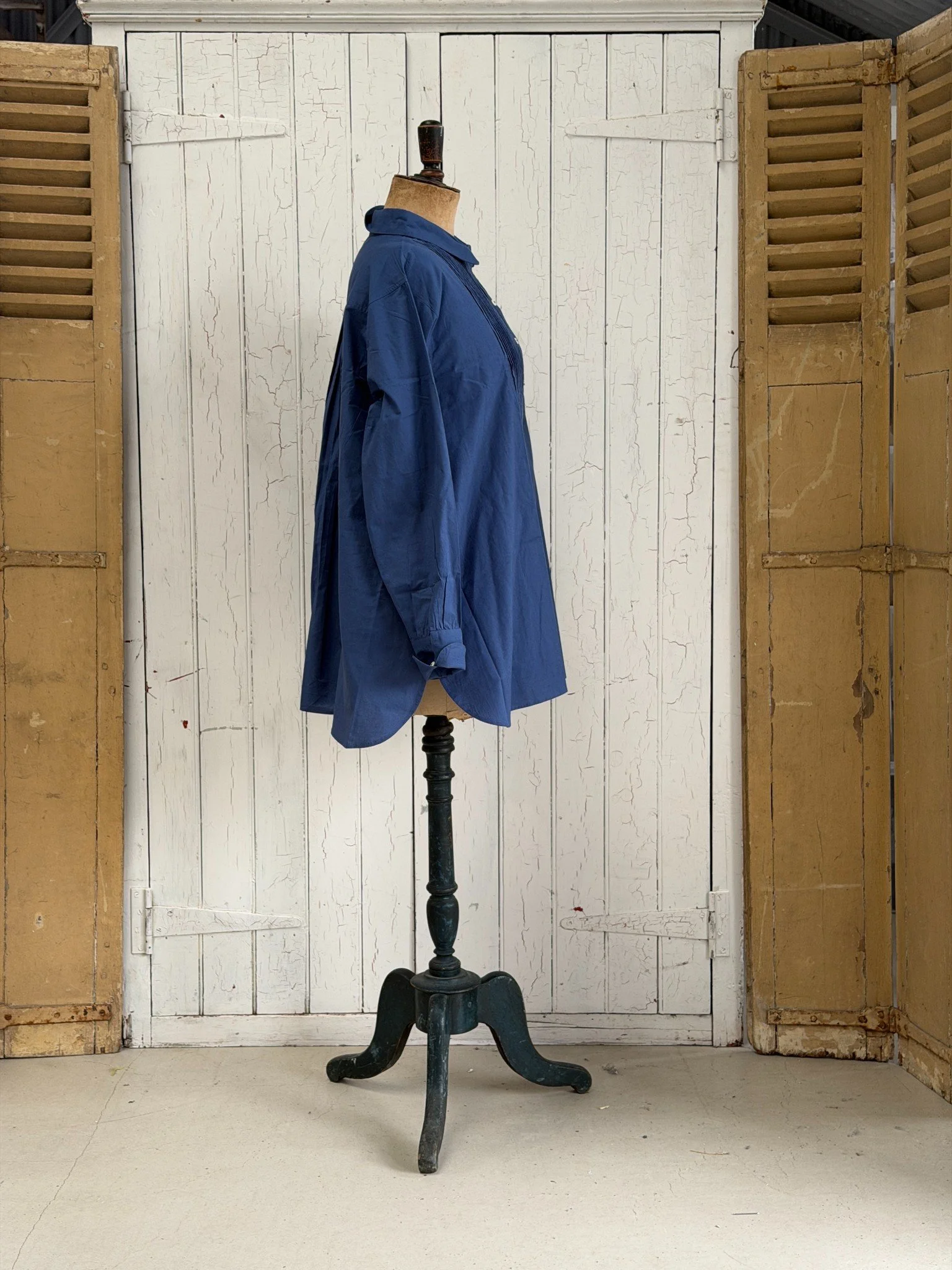
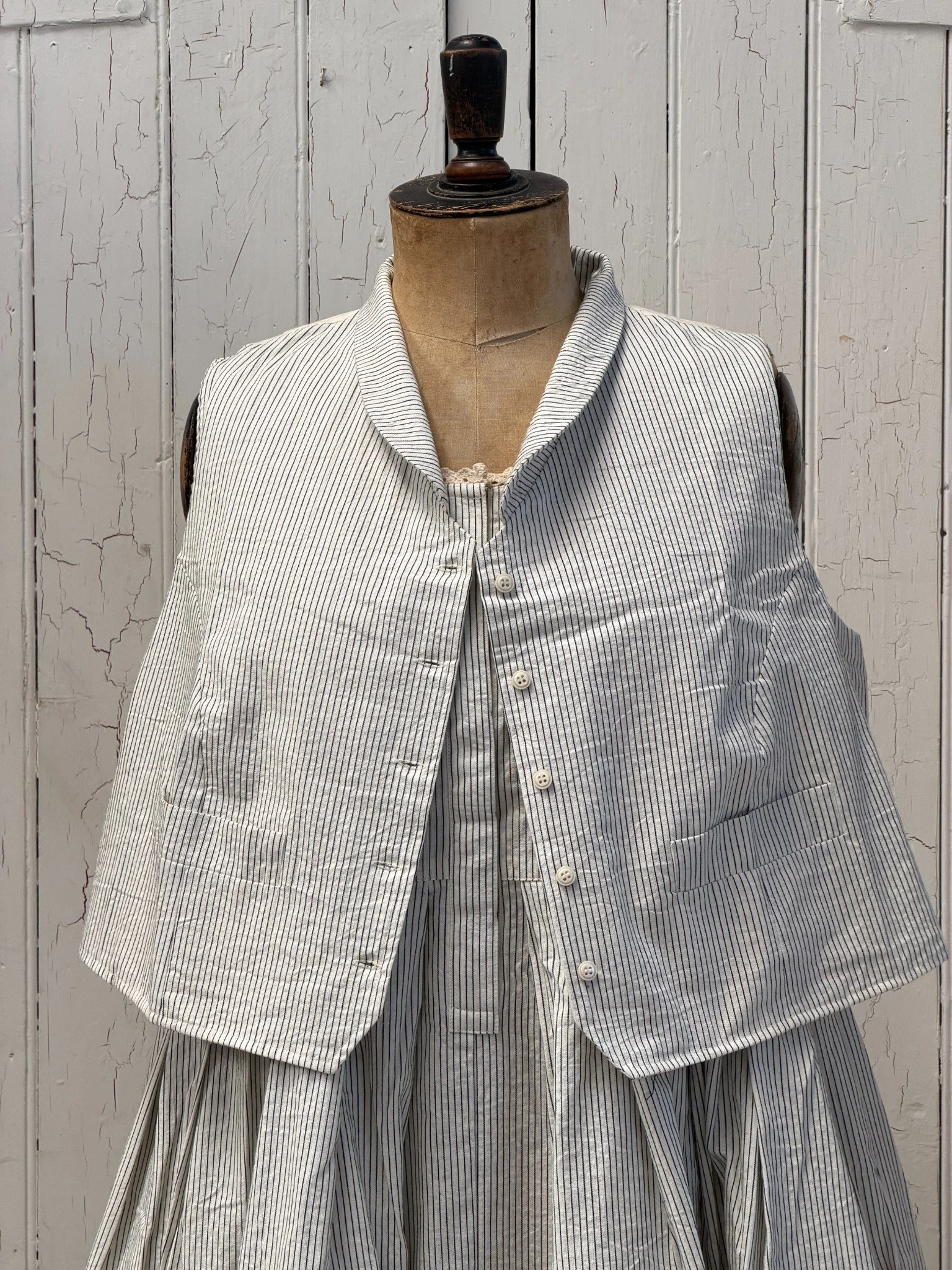
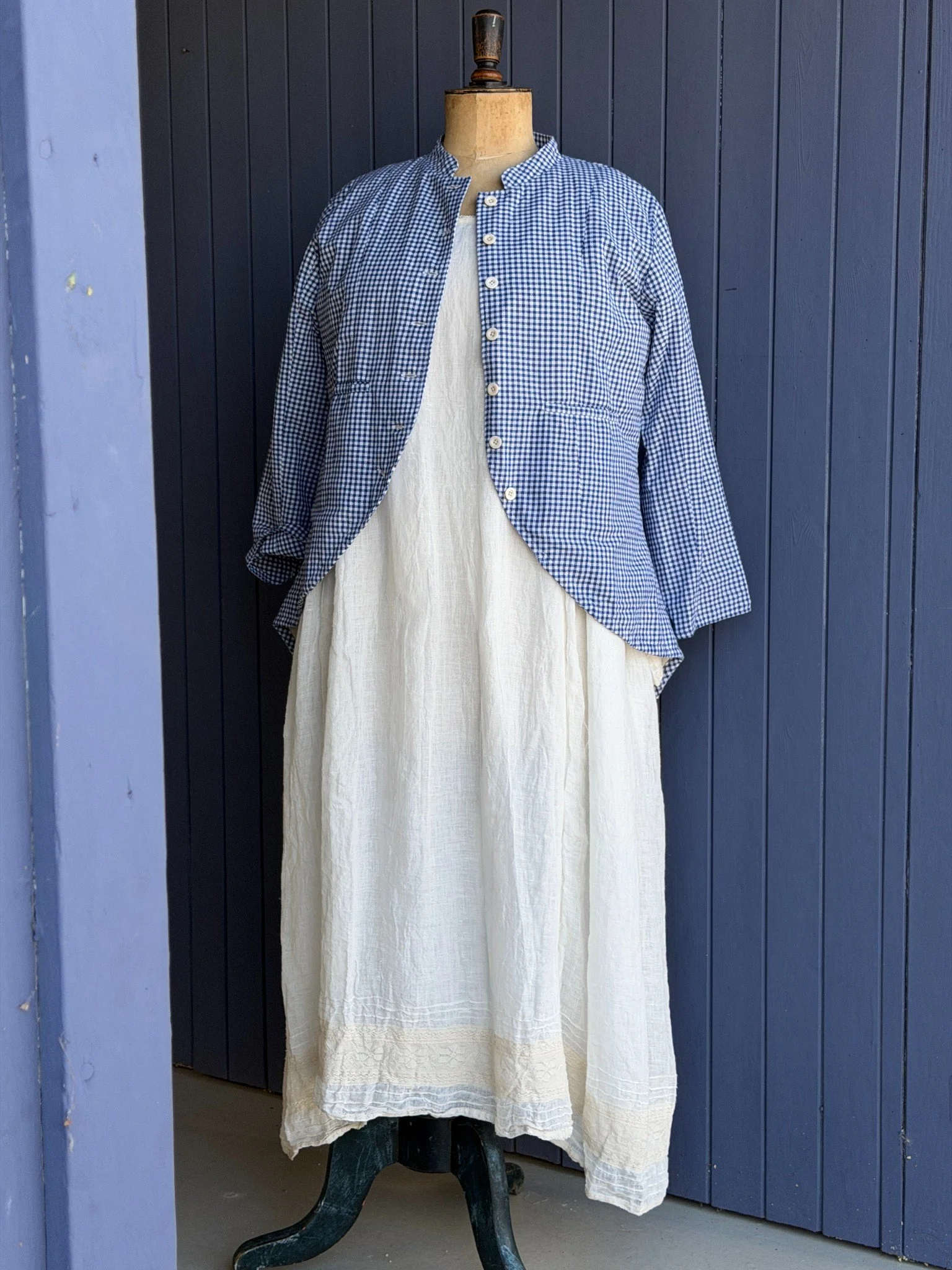
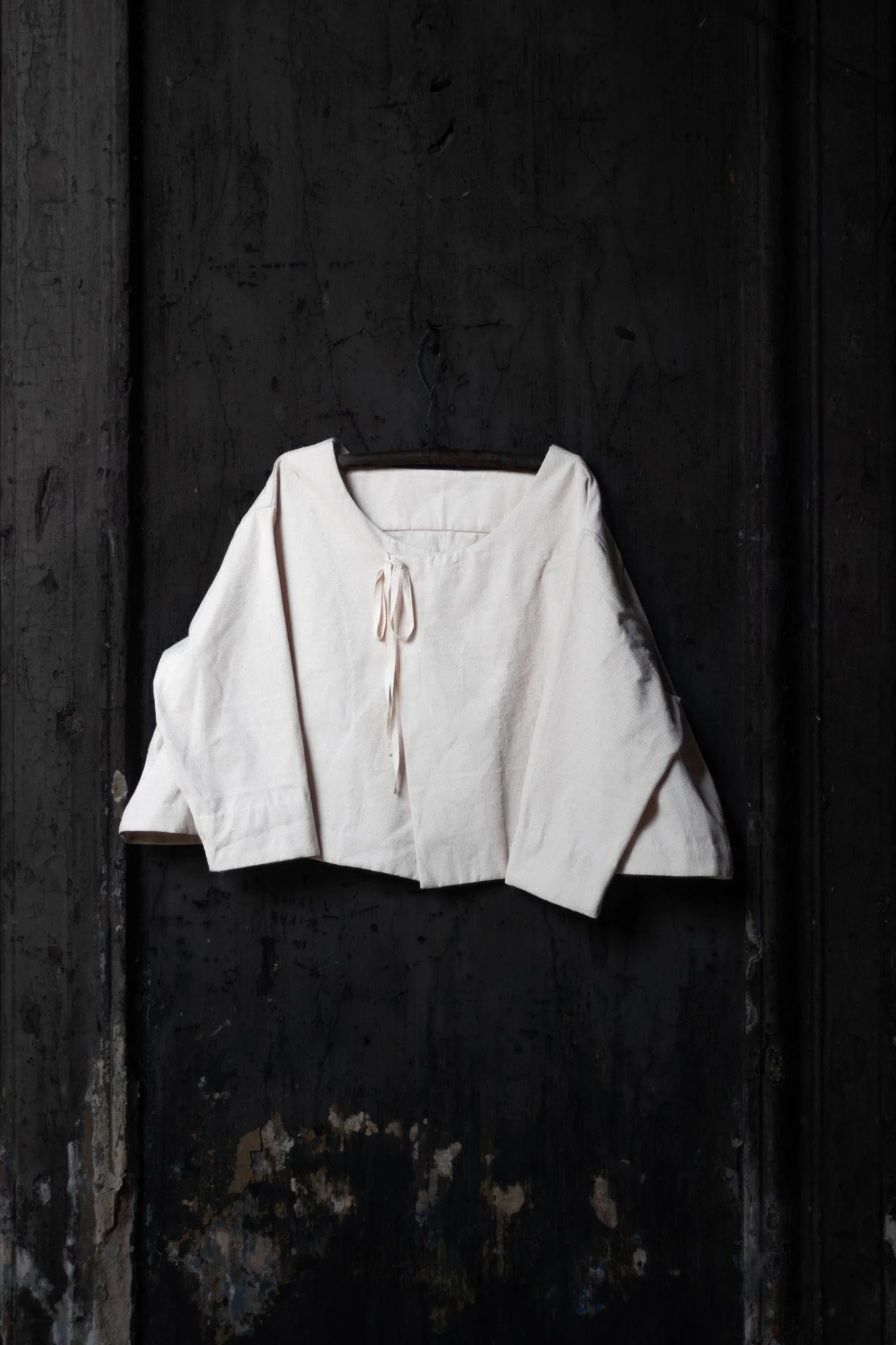
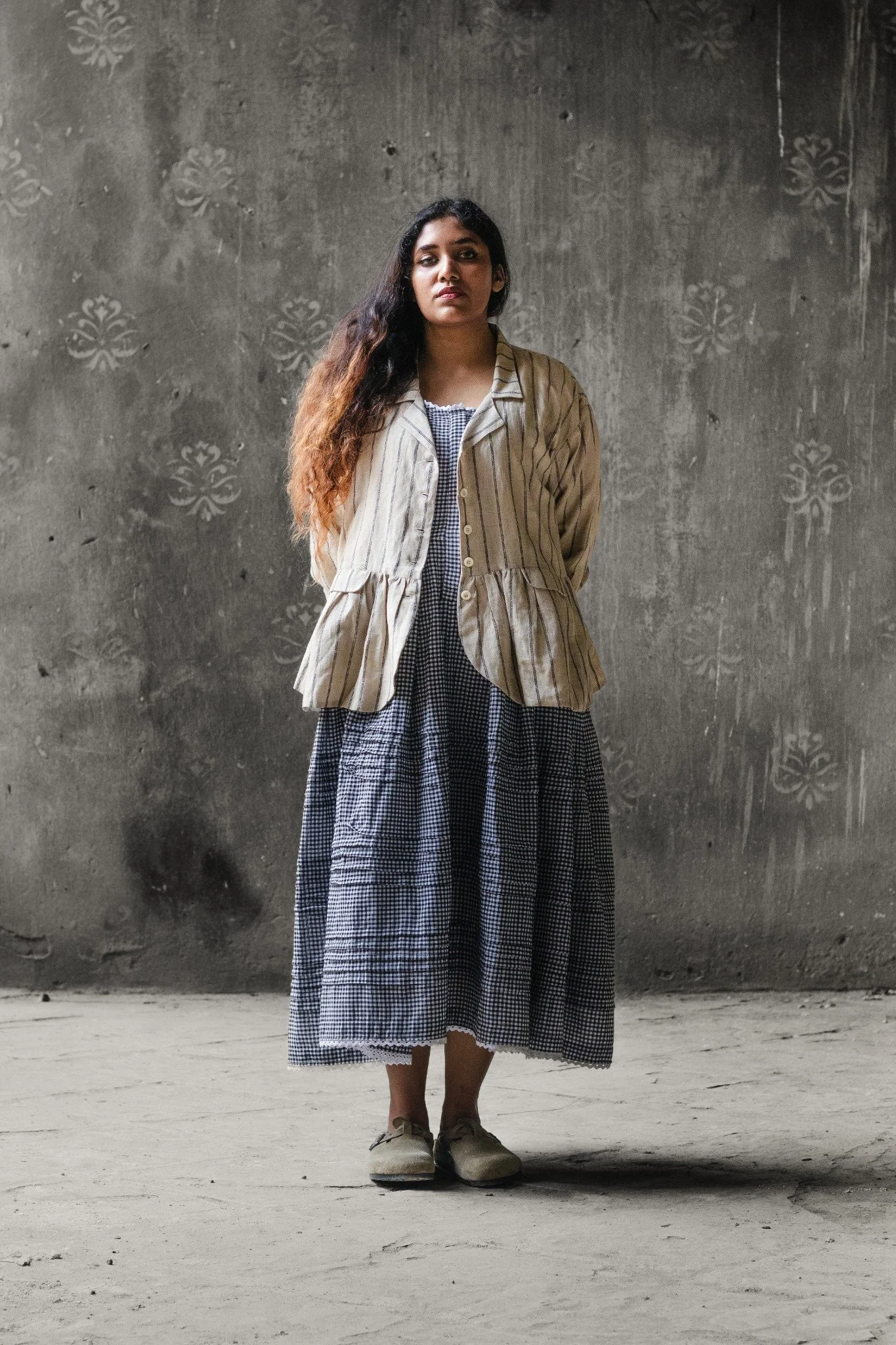
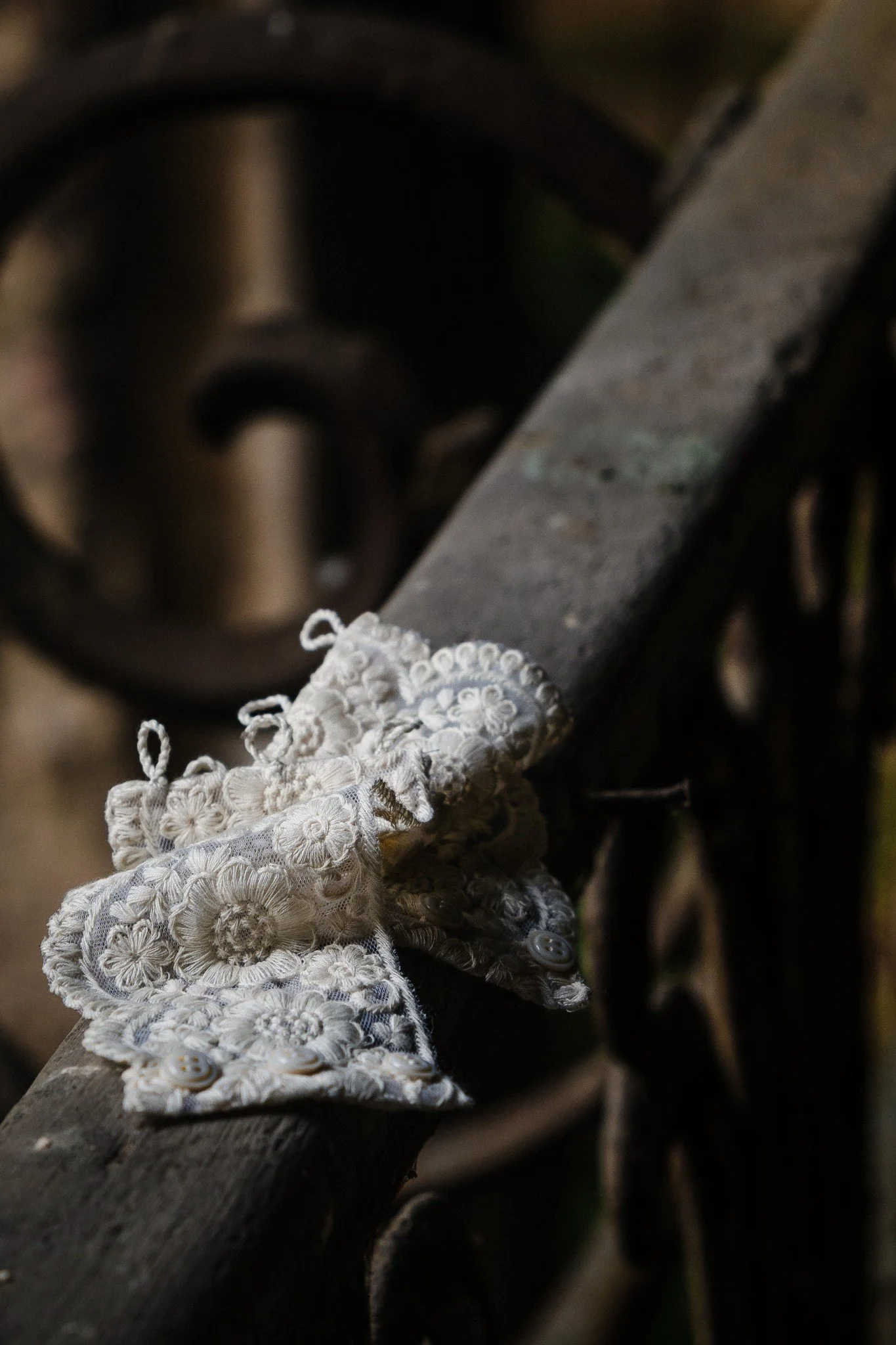
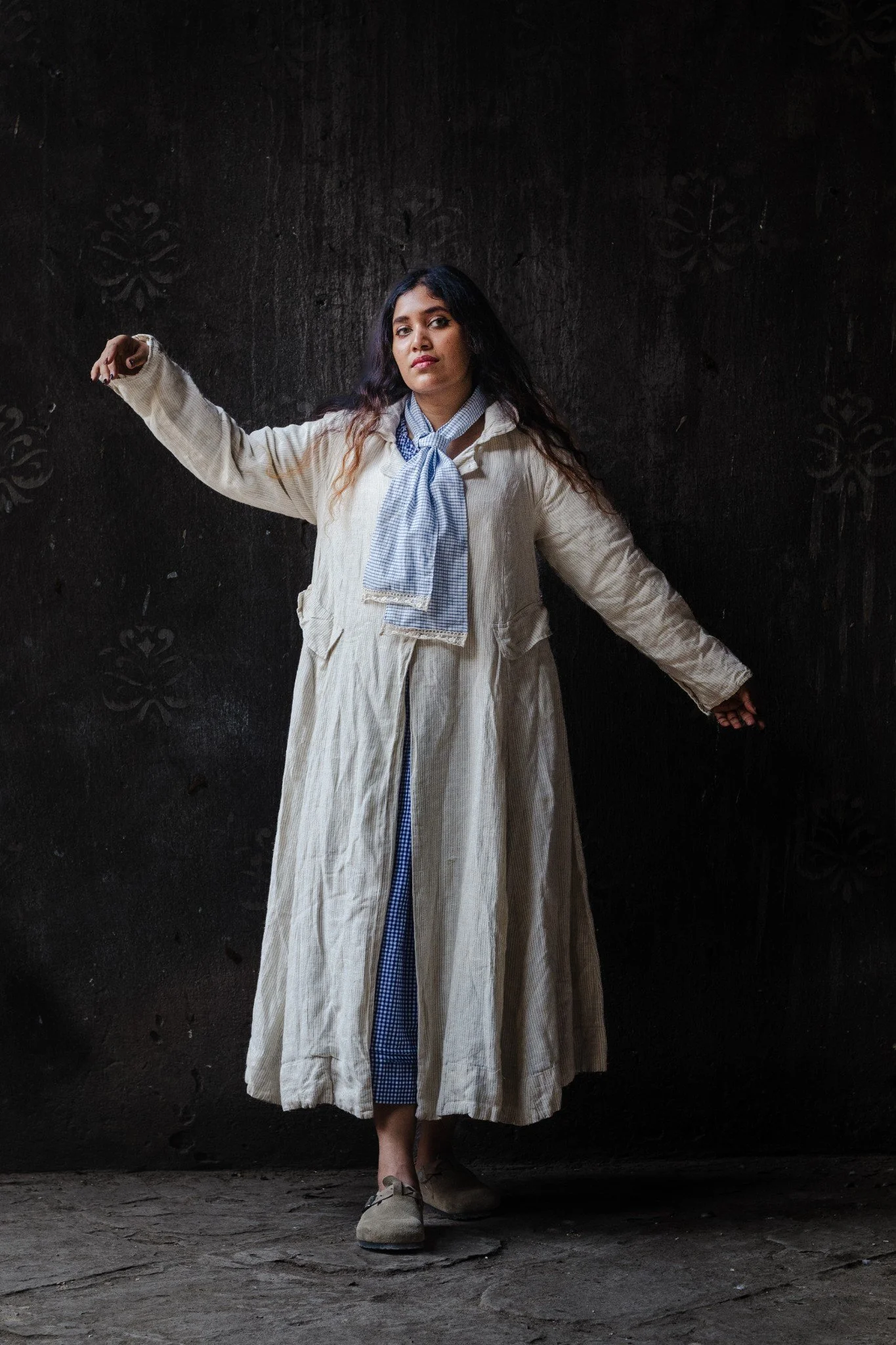
Inspired by the Duster coat, our deep blue Moorland Coat speaks of something older and deeper.
The blue of distances, of weather coming in, of ground that has been walked for centuries.
Garment description
Made from a hand-loomed cotton twill from West Bengal. It’s substantial without being heavy, cut as a duster in a generous A-line that falls to the ankle and goes over everything. The round collar sits neatly at the neck. Deep patch pockets at the hip. A back tab button shapes the silhouette from behind. The cuffs carry a quiet detail that shows when the sleeves are pushed back or the coat is taken off.
Available in two fabrics:
Blue
Black and cream stripe